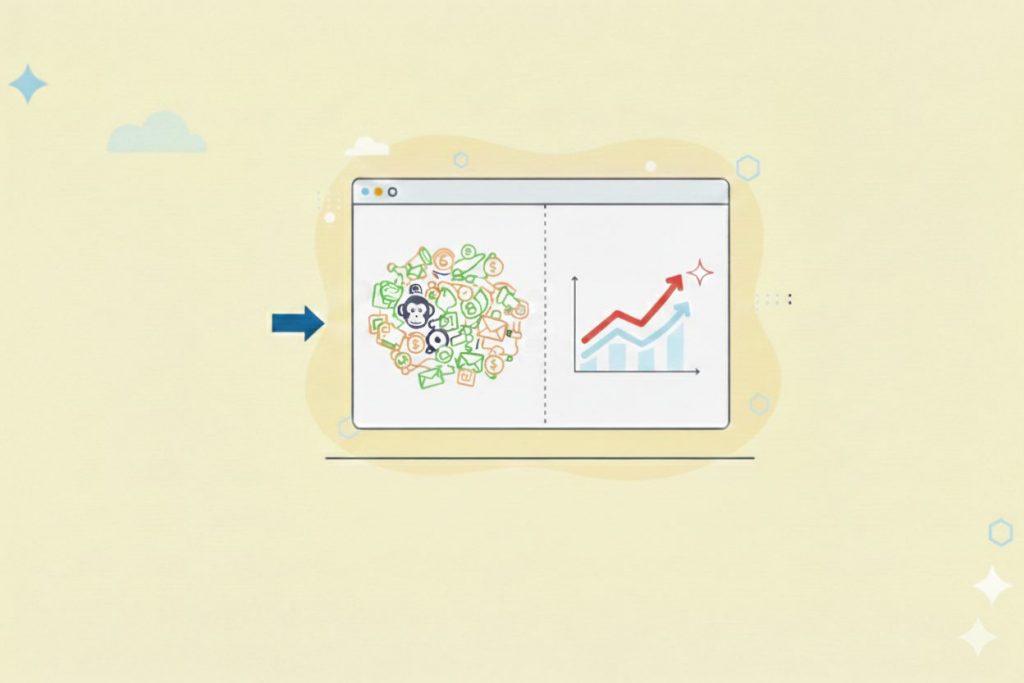


Choosing an integrated CRM and email marketing platform is the fastest way to stop wasting time on manual data entry. While many business owners think separate “best-of-breed” tools offer more power, the reality is that disconnected systems create data silos that hurt your bottom line and frustrate your team.
Cut the “Middleman Markup” with Integrated CRM and Email Marketing
The biggest hidden expense of using separate tools is the Middleman Markup. Most small businesses are forced to pay for “glue” software like Zapier to get their CRM and email lists to talk to each other.
While these connectors are meant to save time, they often create an expensive technical hurdle:
Free Guide
The ABCs of CRM
A Beginner's Guide to Understanding &
Using a CRM
Download Free
You’re All Set!
DownloadGet the most out of this guide by starting your free 14-day trial of Nimble today.
- The Subscription Trap: As your business grows, your “connector” bill grows with it. You end up paying a monthly premium just to move data you already own between two different apps.
- The “Broken Bridge” Risk: Every time you add a new field or change a tag, you risk breaking the connection. When a sync fails, you look disorganized—like sending a “New Customer” discount to someone who has been a loyal client for years.
- The Blind Spot: Even when the sync works, it’s often a one-way street. Your email tool might show a “click,” but your sales team won’t see that context inside the CRM where they actually work.
With integrated CRM and email marketing, you aren’t paying a third party to bridge the gap. There is no “bridge” because there is only one database. When you update a deal, your marketing segments update instantly and for free.
Hyper-Personalization Using “Relationship Intelligence”
Standard email tools only know what you manually type into a spreadsheet. They don’t know the history of the relationship.
With integrated CRM and email marketing, your communications are powered by Relationship Intelligence, which allows you to create dynamic segments based on real-world sales data:
- Current Paid Clients: Filter by Deal Status = Won and Tag = Active to send exclusive loyalty offers or product updates.
- Recent Former Clients (90-120 Days): Segment by Last Contacted to send a “Phase 2” re-engagement note exactly three months after a project wraps.
- Cold Lead Win-Backs (6+ Months): Identify past customers who haven’t had a touchpoint in over 180 days to trigger a “We Miss You” campaign with a fresh incentive.
Instead of a generic “Check out our blog” blast, you can send: “Hi Sarah, I saw you and Mike had a great call yesterday regarding the Enterprise plan. Based on your conversation, here is a case study for the healthcare industry we discussed.”
Accurate ROI Tracking (Close the Loop)
If your tools are separate, measuring the ROI of a marketing campaign is a guessing game. You can see that an email had a 30% open rate, but you can’t easily see if those opens turned into revenue.
When you use an integrated CRM and email marketing solution, you can “close the loop.” You can track a lead from the moment they click a link in a marketing email to the moment the sales rep marks the deal as “Won.” This allows you to see exactly which campaigns are driving dollars, not just clicks.
FAQ: Integrated CRM and Email Marketing
Almost always. Consolidating into one integrated CRM and email marketing platform can save small businesses between $450 and $1,100 per month by eliminating redundant subscriptions for tools like Mailchimp or HubSpot Marketing Hub.
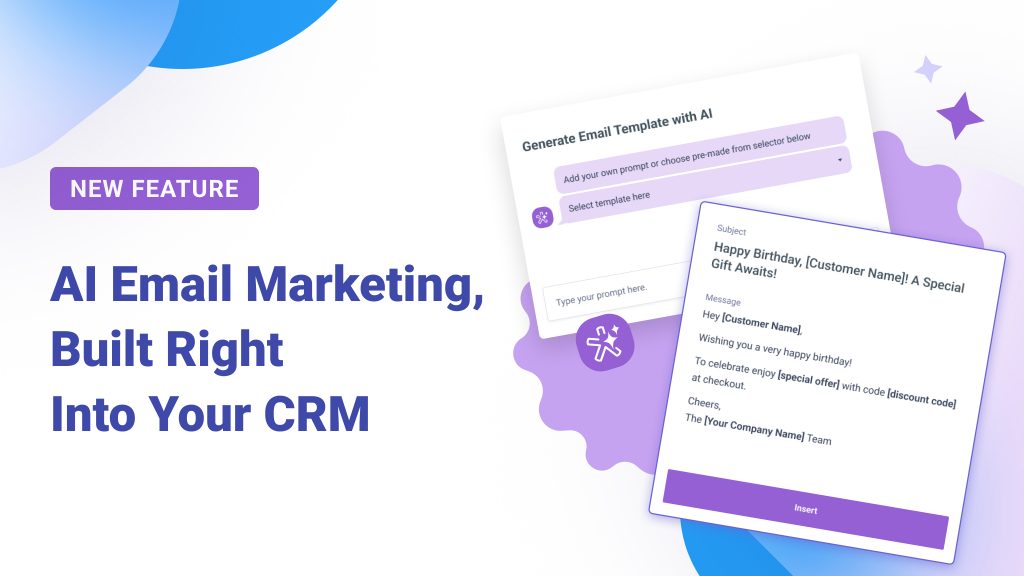
In the past, yes. But in 2026, unified platforms like Nimble offer high-end features like AI-powered writing assistants, double opt-in compliance, and granular segmentation that rival standalone tools—with the added benefit of CRM context.
Yes. Because an integrated CRM and email marketing system keeps your lists cleaner (automatically removing bounces and inactive leads across the whole company), your sender reputation stays higher, ensuring your emails actually land in the inbox.