

Most small businesses don’t outgrow their CRM because the software breaks. They outgrow it because they’re being penalized for succeeding. When your traction grows, HubSpot hits you with an inflection point: The Success Tax. Suddenly, basic automation isn’t a feature; it’s a $1,500 barrier to entry. If you’re comparing HubSpot vs Nimble for a small business, it’s no longer a feature fight—it’s a battle for your bottom line.
The “Freemium” Glass Ceiling
HubSpot’s Free and Starter tiers are the “honeymoon phase.” They work until you need to do the one thing a CRM is supposed to do: Automate.
The moment you try to automatically assign a lead or standardize a pipeline, you hit a glass ceiling. HubSpot doesn’t offer a ladder; they offer a mandatory elevator ride to the Professional Tier that costs thousands.
- Automation is held hostage behind the Professional paywall.
- The upgrade is “All or Nothing”—you can’t just buy the features you need.
- It’s a Success Tax: You aren’t paying for more value; you’re paying for permission to grow.
Why Automation Triggers the HubSpot vs Nimble for Small Business Debate
Many teams realize the “Success Tax” is real only when they need simple workflows to accelerate relationship engagements. This is usually the stage where founders look for a more sustainable path.
The $1,500 Gatekeeper: Onboarding as a Toll
The most offensive part of the HubSpot upgrade isn’t the monthly bill—it’s the mandatory onboarding fee. For a 5-person team, you are often forced to pay $1,500 upfront (for Sales Pro) or up to $3,500 (for Marketing Pro) before you even send your first automated email.
Free Guide
The ABCs of CRM
A Beginner's Guide to Understanding &
Using a CRM
Download Free
You’re All Set!
DownloadGet the most out of this guide by starting your free 14-day trial of Nimble today.
- It’s not optional: It’s a mandatory “tax” to unlock the software you’re already paying for.
- The Expertise Myth: If a CRM is actually “user-friendly,” why do you need to pay a stranger $1,500 to explain how to use it?
- Permission vs. Performance: This fee doesn’t improve your sales; it simply grants you access to the features you’ve already bought.
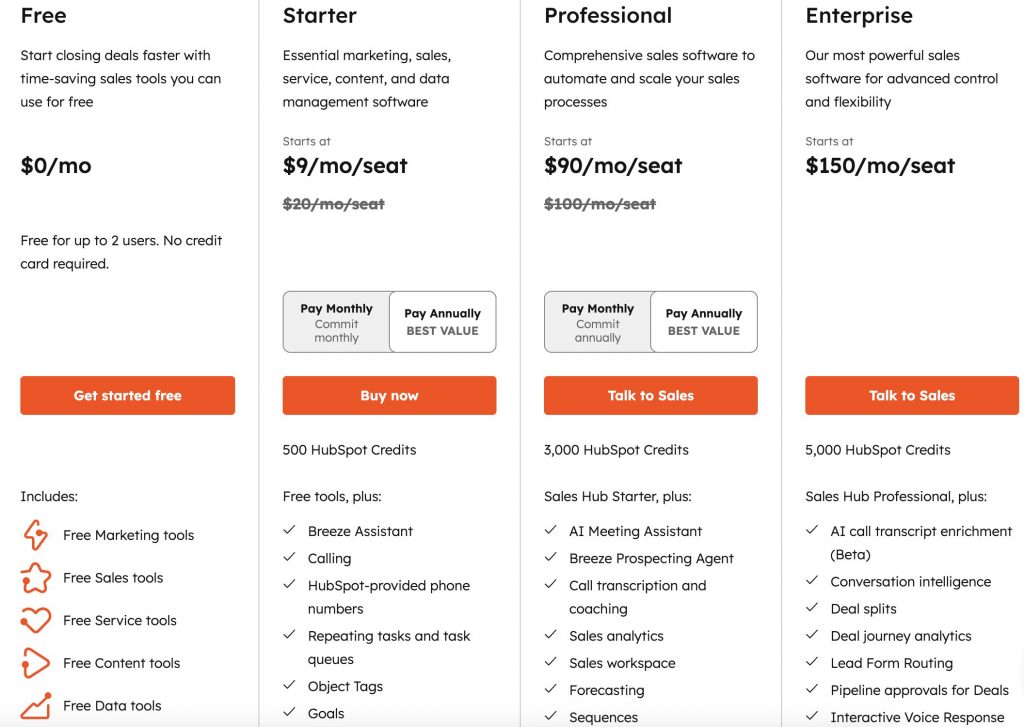
The 2026 TCO Breakdown: HubSpot vs Nimble for Small Business
When you look at the Total Cost of Ownership (TCO) over 12 months, the “Success Tax” becomes a glaring financial leak.
12-Month Cost Comparison (5 Users, 5,000 Contacts)
| Cost Element | HubSpot Sales Professional | Nimble Business |
| Yearly Subscription | ~$2,500 | ~$1,494 |
| Mandatory Onboarding | $1,500+ | $0 |
| Total Year 1 Investment | $4,000+ | $1,494 |
The result? With HubSpot, you spend $4,000 extra just for the privilege of moving into a new tier. With Nimble, your pricing is linear, predictable, and fair.
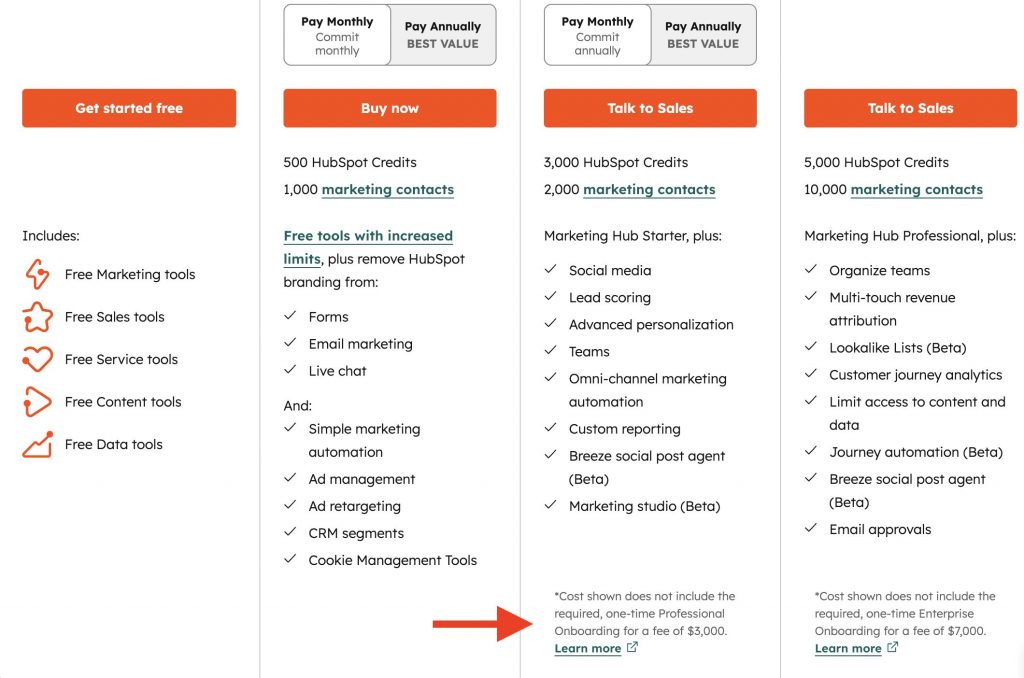
The “Contact Tax”: Why List Building Shouldn’t Hurt
In HubSpot, every lead is a potential liability. Their pricing tiers for “Marketing Contacts” mean that as your database grows, your bill spikes in massive, unpredictable steps.
- HubSpot behavior: You hesitate to import leads because you’re afraid of the next bill.
- Nimble behavior: You import everything. Each user gets 25,000 contacts included.
With HubSpot, list growth increases cost. With Nimble, list growth increases opportunity. This distinction is vital when evaluating HubSpot vs Nimble for small business operations. If you’re a consultancy, check out our best practices for using CRM for consulting agencies to see how list management should actually work.
3 “Gotcha” Questions for Your CRM Sales Rep
Before you sign a contract that scales faster than your revenue, ask these three questions about the HubSpot vs Nimble for small business choice:
- What happens to my bill the second I hit 2,001 marketing contacts? (HubSpot Pro limits start here).
- Can I unlock workflows without upgrading my entire team to Professional? (The answer is almost always “No”).
- If I’m tech-savvy, can I skip the $1,500 onboarding fee? (If they say “No,” you’re paying a toll, not for a service).
The Nimble Alternative: Built for the Operator
Nimble was built for the founder who doesn’t have time to be a full-time CRM administrator. We don’t monetize complexity; we remove it.
Relationship-First Automation
We don’t hide automation behind “Professional” paywalls. We use it to support human conversations, not replace them.
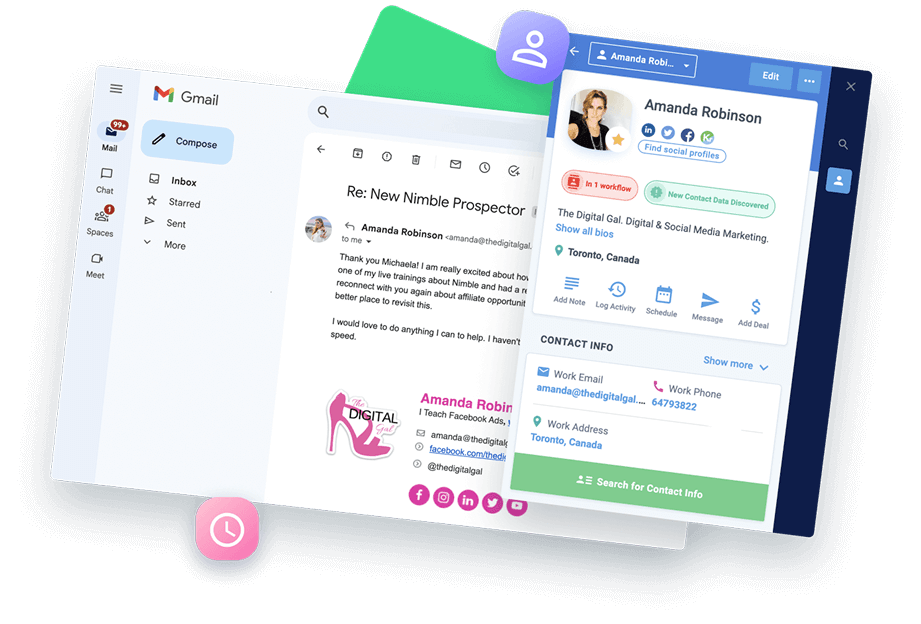
- Enriched Data: Automatically surface social insights and contact history.
- Zero-Friction Setup: Most teams are up and running in days, not months.
- No Mandatory Tolls: We don’t charge you for the “privilege” of using our software.
Conclusion: Reclaim Your Growth Budget
Every dollar spent on a Success Tax is a dollar taken away from hiring your next rep or funding your next marketing campaign.
Stop paying for permission to grow. If your CRM feels like it’s rooting against your success, it’s time to switch. Reclaim your budget and start building relationships without the gatekeeping.
[Try Nimble free for 14 days] and see what growth looks like when your CRM actually wants you to succeed.
FAQ: Navigating the CRM Success Tax
The Success Tax refers to pricing models—common in platforms like HubSpot—where costs increase sharply based on business growth milestones rather than actual feature usage. This typically manifests as mandatory tier upgrades, “contact blocks,” and forced onboarding fees that penalize a small business for expanding its database or team.
HubSpot positions its mandatory onboarding fees (ranging from $1,500 to $3,500) as “guided implementation.” However, for many small businesses, this acts as a financial gatekeeper to the Professional tier. In 2026, many founders view this as a “toll” for accessing core automation features rather than a necessary service for an intuitive platform.
Unlike tiered models that utilize a Success Tax, Nimble offers linear, predictable pricing. At $24.90 per user/month, it includes up to 25,000 contacts and core automation without mandatory onboarding fees or hidden “contact blocks.” This allows businesses to scale their lead lists without fear of sudden billing spikes.
Yes. You avoid the Fragmentation Tax by choosing a “System of Action” that unifies your inbox, social insights, and lead tracking. By moving from a “FrankenStack” of disconnected tools to a unified platform like Nimble, teams can save up to 12.5 hours per week previously lost to manual data entry and “tab fatigue”.