

Looking for a HubSpot Sales alternative? Most small businesses start with HubSpot because it feels like the safest bet. Choosing the “industry standard” creates a sense of security—the assumption that the biggest brand must be the best long-term option.
But as we move into 2026, many SMBs are discovering that this “safe” choice becomes heavy faster than expected.
The comfort of a well-known name often gives way to bill shock, operational drag, and growing complexity. When basic automation sits behind a five-figure paywall—or a single list import doubles marketing contact costs overnight—the math stops working for lean teams.
Nimble is a HubSpot Sales alternative built for small businesses that want growth without complexity. Instead of splitting sales and marketing across disconnected hubs, Nimble unifies relationship management, outreach, and intelligence in one workspace—without enterprise pricing or surprise invoices.
The “HubSpot Trap”: Why Small Businesses Are Re-evaluating the Enterprise Giant
HubSpot Sales is frequently introduced as a CRM that can grow alongside a business. For many small teams, the challenge isn’t growth—it’s the ceiling they hit far earlier than expected.
Many SMBs start on HubSpot’s free or Starter plans expecting to unlock functionality gradually. But the moment a team needs fundamentals like automated sequences, advanced automation, or more control over how data is structured, they’re pushed into higher tiers.
For example, Marketing Hub Professional starts at $890/month, and HubSpot notes a required one-time Professional onboarding fee of $3,000. If you want lead scoring specifically, HubSpot’s documentation and industry guidance place it in Marketing Hub Professional and Enterprise plans.
What begins as a lightweight CRM can quickly turn into a long-term financial and operational commitment—introducing enterprise-level complexity long before most small businesses are ready for it.
From “Free” to Four (or Five) Figures: The Reality of Scaling HubSpot Pricing
HubSpot’s entry-level plans lower the barrier to adoption, but many capabilities small teams consider foundational—such as automation, lead qualification, and advanced reporting—are reserved for higher tiers.
As usage expands, teams commonly run into:
- Forced upgrades to Professional plans to support automation and lead scoring
- Required onboarding fees at higher tiers
- Seat-based and contact-based pricing that increases costs as teams and databases grow
For lean organizations, this structure means total cost of ownership often rises not because the business is doing more—but because it needs the system to handle routine work efficiently.
The Hidden Complexity of Managing Disconnected Hubs for a HubSpot Sales Alternative
HubSpot’s complexity doesn’t usually appear all at once. It shows up gradually, in the form of tabs.
Sales activity lives in one view. Marketing engagement lives in another. Service interactions sit somewhere else. To understand the full context of a single relationship, small teams often find themselves clicking between screens just to answer basic questions about what’s already happened.
Over time, this constant context switching creates tab fatigue. Instead of staying focused on the conversation or opportunity in front of them, users spend time navigating the system—checking activity history, confirming engagement, or verifying whether a lead is actively being worked.
When sales and marketing data need to work together more closely, the solution often involves additional configuration, another hub, or a paid upgrade. The platform becomes something that requires ongoing management rather than something that quietly supports day-to-day work.
Independent reviews reinforce this experience. On G2, small business users consistently rate Nimble higher than HubSpot for ease of use and time to value, reflecting how much less friction teams encounter when relationship data lives in a single place.
That perspective is echoed by industry analysts as well. As Laurie McCabe, Cofounder & Partner at SMB Group, Inc., notes:
“For SMBs, productivity and ease of use are just as important as price when choosing a CRM. Nimble stands out by simplifying relationship management across the whole company—not just sales. With built-in automations and deep email integration, it helps teams engage more effectively, streamline workflows, and drive business growth without the complexity and extra costs of traditional CRMs.”
Free Guide
The ABCs of CRM
A Beginner's Guide to Understanding &
Using a CRM
Download Free
You’re All Set!
DownloadGet the most out of this guide by starting your free 14-day trial of Nimble today.
As this friction compounds, many small businesses begin to question whether a hub-based CRM is actually helping them move faster—or simply adding layers between their teams and their relationships.
Nimble: A Relationship-First HubSpot Sales Alternative for Small Businesses
For small businesses evaluating a HubSpot Sales alternative, the difference often comes down to how well the platform supports ongoing relationship building. Nimble was designed to nurture relationships across sales, marketing, and customer engagement rather than focusing on a single function.
Instead of separating activity across multiple hubs or modules, Nimble brings CRM, prospecting, and outreach into one unified workspace. This structure reduces setup time, limits ongoing complexity, and helps teams stay organized as relationships grow.
Unified Sales Intelligence Without the Premium Price Tag
Many small businesses rely on external tools for contact data, enrichment, and prospecting. Nimble removes much of that dependency by providing unified sales intelligence directly within the CRM.
Nimble allows teams to:
- Enrich contact records automatically with job titles, company details, and employment history
- Discover and add new prospects using Nimble Prospector without separate data providers
- Maintain a complete relationship history that includes emails, notes, tasks, and engagement activity
By consolidating these capabilities into one platform, Nimble reduces tool sprawl while keeping relationship data accurate and accessible.
Predictable Pricing Designed for Sustainable Growth for a HubSpot Sales Alternative
Pricing is another area where Nimble differs meaningfully from HubSpot. Nimble offers transparent pricing starting at $29.90 per user per month, which includes core CRM functionality without feature gating or mandatory onboarding.
This pricing approach allows small businesses to plan growth without needing to account for unexpected upgrades, onboarding fees, or feature unlocks.
Nimble vs. HubSpot Sales Pricing Comparison
| Pricing Factor | Nimble | HubSpot Sales |
| Starting price | $29.90 per user per month | Starts at $100 per month (Sales Hub Professional) |
| Hidden Costs | $0 (Self- serve) | $1,500 – $3,000 (Mandatory Onboarding for Pro tiers) |
| Pricing structure | Flat per-user pricing | Tiered, seat-based pricing |
| Core CRM features | Included at base price | Limited at Starter tier |
| Prospecting and enrichment | Included or available natively | Requires additional tools or integrations |
| Onboarding fees | Not required | Common at higher tiers |
| Contact-based limits | None | Applied across hubs at scale |
| Cost predictability | High and easy to forecast | Increases as usage and features expand |
HubSpot Sales Hub pricing showing Professional plan at $100 per month per seat and Enterprise plan starting at $150 per month per seat
While HubSpot offers a free CRM layer, meaningful Sales Hub functionality begins at the paid tier and scales upward through Professional and Enterprise plans. As teams add users, automation, and supporting tools, costs can increase quickly and become harder to forecast.
For small businesses that value financial clarity and operational simplicity, Nimble provides a more predictable alternative to HubSpot’s seat-based pricing model.
Head-to-Head: Comparing the SMB Experience in 2026
When small businesses compare CRM platforms, especially when evaluating a HubSpot Sales alternative, the difference often comes down to how easy the system is to set up and manage over time. Teams want tools that support consistent relationship management without requiring ongoing configuration or technical support.
This comparison focuses on two practical areas that directly affect day-to-day use: setup and automation.
Ease of Setup: Getting Started Without Heavy Training
For small businesses considering a HubSpot Sales alternative, ease of setup includes both initial onboarding and what it takes to stay productive as needs grow.
Nimble is designed to get teams up and running quickly. CRM, prospecting, and enrichment are available natively, allowing businesses to begin organizing contacts and engagement without building integrations or configuring complex systems.
HubSpot Sales often requires more setup as usage expands. While basic CRM functionality is accessible, adopting additional sales features typically involves configuring pipelines, permissions, workflows, and integrations across different hubs. For small teams, this can extend the time it takes to fully operationalize the platform.
As a result, many small businesses experience a faster and simpler onboarding process with Nimble when comparing a HubSpot Sales alternative.
Automation That Actually Works for Small Teams
Automation only improves efficiency when it gives teams peace of mind.
HubSpot’s automation is powerful, but it’s built for complex, multi-team operations. Configuring workflows across sales and marketing requires careful setup, constant monitoring, and the confidence that one mistake won’t trigger the wrong message to the wrong audience.
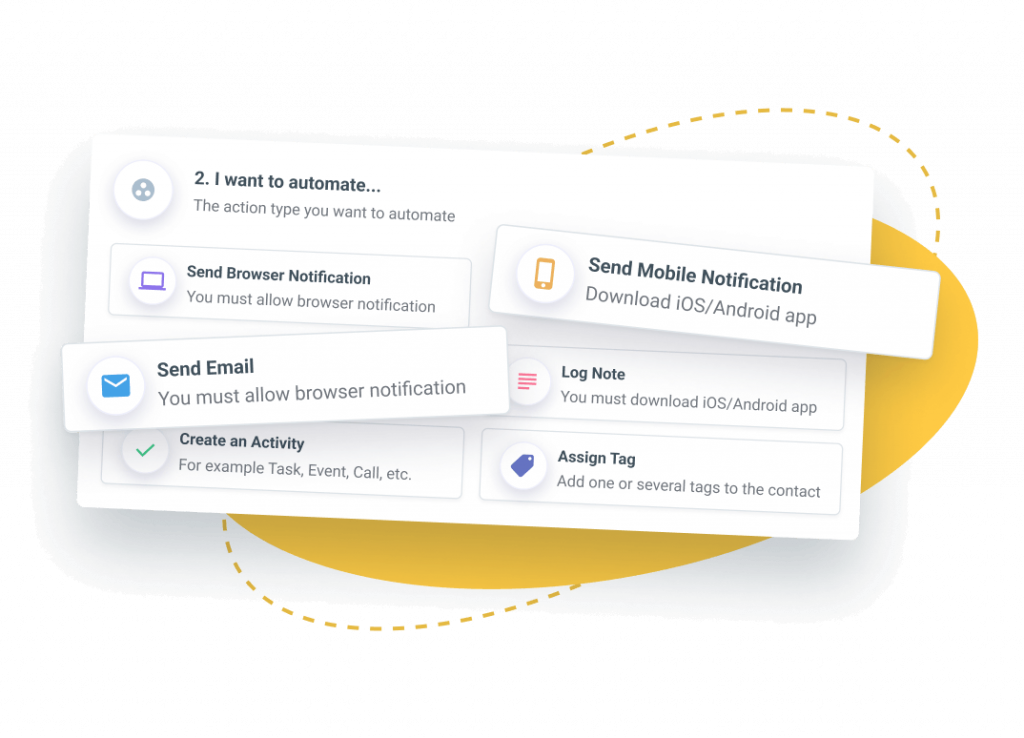
Nimble takes a quieter approach. Automation runs in the background—automatically enriching contacts, tracking activity, and keeping relationship data current—without requiring teams to design, test, and maintain complex workflows. You focus on the person, not the process.
For small businesses, that peace of mind matters. When automation works reliably without constant oversight, teams can spend less time managing systems and more time building relationships.
The Final Verdict: When to Stick with HubSpot and When to Switch to Nimble
Both HubSpot Sales and Nimble can support growing businesses, but they are designed for different operating models. The decision is less about which platform has more features and more about which one aligns with how a business actually manages relationships, outreach, and engagement on a daily basis.
Choose HubSpot If
HubSpot Sales is typically a better fit for mid-market organizations with dedicated operations or RevOps resources. Businesses that run large marketing programs, rely on advanced reporting, or manage highly structured, multi-stage processes across sales, marketing, and service teams may benefit from HubSpot’s modular design. The platform is well suited for organizations that are comfortable investing in ongoing configuration, training, and higher-tier plans as their needs become more complex.
Choose Nimble If
Nimble is often the better choice for small businesses looking for a HubSpot Sales alternative that prioritizes simplicity and relationships over system complexity. Organizations that want a single platform to manage contacts, prospecting, and outreach tend to adopt Nimble more quickly. Predictable pricing, minimal setup, and a unified experience make Nimble especially well suited for lean teams that value clarity, consistency, and relationship-based growth.