

Last updated:
Customer Relationship Management (CRM) systems have become indispensable tools for businesses across industries, and startup consulting firms are no exception. These firms, which guide early-stage companies through strategy, growth, and operational challenges, rely heavily on building and maintaining strong client relationships. A well-implemented CRM system can streamline operations, enhance client interactions, and drive business success. However, the unique nature of startup consulting—characterized by dynamic client needs, limited resources, and high-growth ambitions—requires a tailored approach to CRM usage.
This article explores three best practices for using CRM systems in a startup consulting business: leveraging data-driven client insights, automating workflows to enhance efficiency, and customizing CRM to align with consulting workflows. By adopting these practices, startup consulting firms can maximize the value of their CRM systems, improve client satisfaction, and position themselves for scalable growth.
1. Leveraging Data-Driven Client Insights
In startup consulting, understanding clients’ needs, challenges, and goals is critical to delivering tailored solutions. A CRM system serves as a centralized repository for client data, enabling consultants to gain actionable insights that drive strategic decision-making. By leveraging data-driven insights, consulting firms can enhance client engagement, anticipate needs, and build long-term relationships.
Why Data-Driven Insights Matter
Startup consulting clients often operate in high-pressure environments with rapidly evolving priorities. A CRM system allows consultants to track client interactions, project milestones, and feedback, providing a 360-degree view of each client’s journey. This data can reveal patterns, such as common pain points among startups in a specific industry or recurring requests for particular services. Armed with these insights, consultants can proactively address client needs, propose relevant solutions, and demonstrate their value as trusted advisors.
For example, a consulting firm working with tech startups might use CRM data to identify that many clients struggle with customer acquisition strategies. By analyzing this trend, the firm can develop targeted workshops or service packages to address this challenge, positioning itself as a go-to resource in the market.
Best Practices for Leveraging CRM Data
To effectively use CRM for data-driven insights, startup consulting firms should focus on the following:
- Centralize Client Data: Ensure all client-related information—emails, meeting notes, project deliverables, and feedback—is stored in the CRM. This creates a single source of truth, reducing the risk of miscommunication or lost information. For instance, tools like Salesforce or HubSpot allow consultants to log every interaction, from initial outreach to post-project follow-ups.
- Segment Clients for Personalized Engagement: Use CRM segmentation features to categorize clients based on criteria such as industry, company size, or service needs. This enables consultants to tailor communications and services to specific client groups. For example, a firm might segment clients into “pre-seed startups” and “Series A companies” to offer stage-specific advice.
- Track Key Metrics: Define and monitor key performance indicators (KPIs) within the CRM, such as client retention rates, project completion times, or net promoter scores (NPS). These metrics provide insights into client satisfaction and operational efficiency. For instance, a low NPS might indicate the need for improved communication or service delivery.
- Use Analytics for Proactive Problem-Solving: Leverage CRM analytics tools to identify trends and predict client needs. For example, if the CRM shows that clients frequently request support with fundraising after completing a strategy engagement, the firm can proactively offer pitch deck coaching or investor introduction services.
Implementation Tips
To implement this practice, choose a CRM with robust reporting and analytics capabilities, such as Zoho CRM or Pipedrive. Train team members to consistently input and update client data, as incomplete records can undermine insights. Additionally, schedule regular reviews of CRM reports to discuss findings and adjust strategies accordingly. For instance, a monthly team meeting to analyze client engagement trends can uncover opportunities to refine service offerings.
Real-World Impact
A startup consulting firm that implemented data-driven insights through its CRM saw a 20% increase in client retention within six months. By identifying that clients valued regular progress updates, the firm used its CRM to automate personalized status reports, strengthening relationships and reducing churn. This example underscores the power of leveraging CRM data to anticipate and meet client expectations.

2. Automating Workflows to Enhance Efficiency
Startup consulting firms often operate with lean teams, juggling multiple clients and projects simultaneously. Manual tasks, such as scheduling meetings, sending follow-up emails, or generating invoices, can consume valuable time and resources. By automating workflows within a CRM system, firms can streamline operations, reduce errors, and free up time for high-value activities like client strategy sessions or business development.
The Case for Automation
Automation eliminates repetitive tasks, allowing consultants to focus on delivering exceptional service. For example, automating lead nurturing emails ensures that prospects receive timely, personalized messages without manual intervention. Similarly, automated project management workflows can assign tasks, send reminders, and track progress, ensuring projects stay on schedule. In a startup consulting context, where time is a scarce resource, automation is a game-changer.
Moreover, automation enhances consistency. Automated workflows ensure that every client receives the same level of attention and follow-up, regardless of the consultant assigned to them. This standardization is particularly important for building a reputable brand in the competitive consulting market.
Best Practices for Workflow Automation
To maximize the benefits of automation, startup consulting firms should adopt the following practices:
- Map Out Key Processes: Identify repetitive tasks that can be automated, such as lead qualification, client onboarding, or invoice generation. For example, a firm might automate the process of sending a welcome email and scheduling an onboarding call once a new client signs a contract.
- Use CRM Automation Tools: Select a CRM with built-in automation features, such as HubSpot’s workflows or Salesforce’s Process Builder. These tools allow firms to create rules that trigger actions based on specific conditions. For instance, a rule might automatically assign a follow-up task to a consultant when a client submits a feedback form.
- Integrate with Other Tools: Connect the CRM with tools commonly used in consulting, such as email marketing platforms (e.g., Mailchimp), project management software (e.g., Asana), or accounting systems (e.g., QuickBooks). This ensures seamless data flow and reduces manual data entry. For example, integrating a CRM with Calendly can automate meeting scheduling and sync appointments to the CRM.
- Monitor and Optimize Workflows: Regularly review automated workflows to ensure they align with current business needs. For instance, if a firm expands its services, it may need to update its lead nurturing emails to reflect new offerings. Use CRM analytics to measure the impact of automation, such as time saved or increased response rates.
Implementation Tips
Start by automating high-impact, low-complexity tasks, such as sending automated thank-you emails after client meetings. Gradually expand to more complex workflows, like automated project status updates. Ensure all team members are trained on the CRM’s automation features to maintain consistency. Additionally, test workflows before full deployment to catch any errors, such as incorrect email triggers or task assignments.
Real-World Impact
A startup consulting firm that automated its client onboarding process reduced onboarding time by 30%. By using its CRM to automatically send contracts, schedule kickoff calls, and assign tasks to team members, the firm improved efficiency and created a polished, professional experience for clients. This allowed consultants to focus on delivering strategic advice rather than administrative tasks.
3. Customizing CRM to Align with Consulting Workflows
Every startup consulting firm has unique processes, services, and client engagement models. While off-the-shelf CRM systems offer powerful features, they may not fully align with a firm’s specific needs. Customizing the CRM to reflect the firm’s workflows ensures that the system supports, rather than hinders, daily operations.
The Need for Customization
Startup consulting workflows often involve complex, multi-stage processes, such as conducting market research, developing growth strategies, or facilitating investor introductions. A generic CRM setup may lack the fields, dashboards, or integrations needed to manage these tasks effectively. Customization allows firms to tailor the CRM to their specific service offerings, team structure, and client expectations.
For example, a consulting firm specializing in go-to-market strategies might need custom fields to track client product launches, competitor analyses, or marketing campaign metrics. Without customization, consultants may resort to external tools or spreadsheets, leading to fragmented data and inefficiencies.
Best Practices for CRM Customization
To customize a CRM effectively, startup consulting firms should focus on the following:
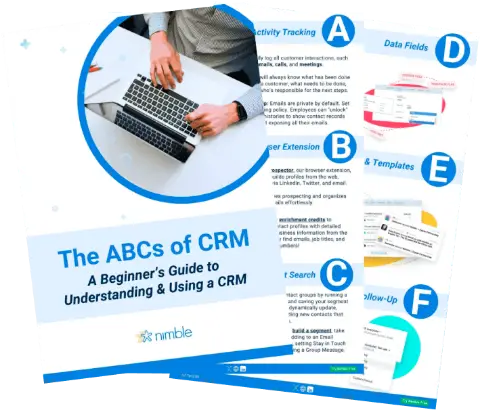
Free Guide
The ABCs of CRM
A Beginner's Guide to Understanding &
Using a CRM
Download Free
You’re All Set!
DownloadGet the most out of this guide by starting your free 14-day trial of Nimble today.
- Define Custom Fields and Modules: Identify data points critical to the firm’s workflows and create custom fields to capture them. For example, a firm might add fields for “client funding stage,” “target market,” or “key deliverables.” Some CRMs, like Zoho, also allow the creation of custom modules for unique processes, such as managing pitch deck reviews.
- Tailor Dashboards and Reports: Customize CRM dashboards to display metrics relevant to the firm’s goals, such as pipeline value, client satisfaction scores, or project completion rates. For instance, a dashboard showing active projects by consultant can help managers allocate resources effectively.
- Configure User Roles and Permissions: Set up user roles to ensure team members access only the data and features relevant to their responsibilities. For example, junior consultants might have view-only access to client records, while senior consultants can edit contracts or approve proposals.
- Align with Client-Facing Processes: Customize client-facing elements, such as email templates, proposal formats, or client portals, to reflect the firm’s brand and values. For example, a CRM like Freshsales allows firms to create branded client portals where startups can access project updates, documents, and invoices.
Implementation Tips
Engage the entire team during the customization process to ensure the CRM meets everyone’s needs. Work with a CRM consultant or leverage the platform’s support resources to implement complex customizations, such as API integrations or custom workflows. Regularly solicit feedback from users to identify areas for improvement, and update the CRM as the firm’s services or processes evolve.
Real-World Impact
A startup consulting firm that customized its CRM to include fields for tracking client pitch deck iterations saw a 25% improvement in project delivery times. By tailoring the CRM to its workflow, the firm ensured consultants could quickly access and update relevant data, reducing delays and enhancing client satisfaction. This customization also enabled the firm to generate detailed reports on pitch deck performance, which became a differentiator in client presentations.
4. Enhancing Client Communication Through CRM Integration
Effective communication is the cornerstone of successful client relationships in startup consulting. Clients expect timely, personalized, and consistent interactions, whether it’s a project update, a strategic recommendation, or a response to an inquiry. By integrating CRM systems with communication tools and leveraging their features, startup consulting firms can streamline client interactions, reduce response times, and foster trust.
Why Communication Integration Matters
Startup consulting clients often operate in fast-paced environments, requiring quick and clear communication to address their evolving needs. A CRM system, when integrated with email, messaging platforms, and client portals, centralizes communication channels, ensuring no message is missed and all interactions are tracked. This not only improves responsiveness but also provides a historical record of conversations, which is invaluable for maintaining continuity across projects or team transitions.
For example, a consulting firm might use CRM-integrated email tools to send personalized project updates to clients, while also tracking their engagement with these messages. This ensures consultants can follow up promptly if a client hasn’t responded, demonstrating attentiveness and professionalism.
Best Practices for Enhancing Communication
To optimize client communication through CRM integration, startup consulting firms should focus on the following:
- Integrate with Email and Messaging Platforms: Connect the CRM with tools like Gmail, Outlook, or Slack to sync emails and messages automatically. For instance, HubSpot’s email integration allows consultants to send emails directly from the CRM and log responses, ensuring all communication is captured in the client’s profile.
- Use Automated Communication Triggers: Set up automated emails or notifications for key moments in the client journey, such as project milestones, contract renewals, or follow-up reminders. For example, a CRM like Freshsales can send an automated “thank you” email after a discovery call, followed by a calendar invite for the next meeting.
- Implement Client Portals: Leverage CRM features to create client-facing portals where startups can access project documents, timelines, and updates in real time. Salesforce’s Experience Cloud, for example, allows firms to build branded portals that enhance transparency and reduce back-and-forth communication.
- Personalize Communication at Scale: Use CRM data to personalize messages with client-specific details, such as their company name, industry, or recent project milestones. This creates a tailored experience without requiring manual effort. For instance, Zoho CRM’s mail merge feature can insert dynamic fields into email templates.
Implementation Tips
Choose a CRM with strong integration capabilities and test integrations to ensure seamless data flow. Train team members to log all client interactions in the CRM, even informal ones, to maintain a complete communication history. Regularly review communication metrics, such as email open rates or response times, to identify areas for improvement. For example, a low open rate might prompt the firm to refine email subject lines or timing.
Real-World Impact
A startup consulting firm that integrated its CRM with Gmail and Calendly reduced client response times by 40%. By syncing emails and automating meeting scheduling, the firm ensured timely follow-ups and eliminated scheduling conflicts. Clients reported higher satisfaction due to the firm’s responsiveness, leading to a 15% increase in repeat engagements.
5. Driving Team Collaboration with CRM
Startup consulting firms often rely on small, multidisciplinary teams to deliver complex services, from market analysis to fundraising support. Effective collaboration among team members is essential to ensure projects stay on track and clients receive cohesive, high-quality deliverables. A CRM system can serve as a collaborative hub, enabling seamless information sharing, task coordination, and accountability.
Why Team Collaboration Matters
In a consulting firm, multiple team members may interact with the same client, each contributing expertise in areas like strategy, operations, or marketing. Without a centralized system, information silos can form, leading to miscommunication or duplicated efforts. A CRM system fosters collaboration by providing a shared platform where team members can access client data, track project progress, and coordinate tasks in real time.
For instance, a consultant preparing for a client meeting can use the CRM to review notes from a colleague’s previous interaction, ensuring alignment and avoiding redundant questions. This collaborative approach enhances efficiency and presents a unified front to clients.
Best Practices for Driving Collaboration
To leverage CRM for team collaboration, startup consulting firms should adopt the following practices:
- Centralize Project Management: Use the CRM’s project management features to assign tasks, set deadlines, and track progress. For example, Pipedrive’s deal tracking allows teams to manage consulting engagements as “deals,” with tasks assigned to specific team members.
- Enable Real-Time Updates: Encourage team members to update client records in real time, such as logging meeting outcomes or uploading deliverables. CRMs like Salesforce support mobile access, allowing consultants to update records on the go, ensuring everyone has the latest information.
- Facilitate Internal Communication: Use CRM features like internal notes or chat integrations to share insights or flag urgent tasks. For instance, HubSpot’s team collaboration tools allow consultants to tag colleagues in client records to request input or escalate issues.
- Create Shared Dashboards: Set up CRM dashboards that display team-wide metrics, such as active projects, upcoming deadlines, or client satisfaction scores. This fosters transparency and keeps everyone aligned on priorities. Zoho CRM’s dashboard customization, for example, supports team-specific views.
Implementation Tips
Define clear protocols for CRM usage, such as requiring task updates within 24 hours of completion. Provide training on collaboration features to ensure all team members are comfortable using the system. Regularly solicit feedback to identify collaboration bottlenecks, such as outdated records or unclear task assignments. For complex projects, consider integrating the CRM with tools like Trello or Asana for enhanced project management.
Real-World Impact
A startup consulting firm that used its CRM to centralize project tasks and enable real-time updates reduced project delays by 25%. By ensuring all team members could access the latest client data and task statuses, the firm improved coordination and delivered projects on time, earning praise from clients for its seamless execution.

6. Using CRM to Support Scalable Growth
Startup consulting firms often aim to scale rapidly, taking on more clients, expanding services, or entering new markets. A CRM system can support this growth by providing a scalable framework for managing increased complexity without sacrificing service quality. By proactively configuring the CRM to accommodate growth, firms can avoid operational bottlenecks and maintain client satisfaction as they expand.
Why Scalability Matters
As a consulting firm grows, so do its client base, team size, and operational demands. Manual processes that worked for a handful of clients become unsustainable at scale, leading to errors, delays, or inconsistent client experiences. A CRM designed for scalability ensures the firm can handle more clients, streamline onboarding, and maintain data integrity without requiring a complete system overhaul.
For example, a firm expanding from local to international clients might use its CRM to manage time zone differences, currency conversions, and localized communication preferences, ensuring a consistent experience across markets.
Best Practices for Supporting Scalable Growth
To use CRM as a foundation for growth, startup consulting firms should focus on the following:
- Choose a Scalable CRM Platform: Select a CRM that can grow with the business, offering features like unlimited users, advanced analytics, or multi-language support. Salesforce and HubSpot, for instance, provide tiered plans that scale with the firm’s needs.
- Standardize Processes: Use the CRM to document and enforce standardized processes, such as client onboarding, project delivery, or invoicing. This ensures consistency as the team grows or new services are added. For example, Zoho CRM’s blueprint feature allows firms to define step-by-step workflows for key processes.
- Automate Scalable Workflows: Implement automation for tasks that will increase in volume as the firm grows, such as lead scoring, client follow-ups, or reporting. This prevents the team from being overwhelmed by repetitive tasks. Pipedrive’s automation tools, for instance, can scale lead nurturing campaigns as the firm attracts more prospects.
- Plan for Data Growth: Configure the CRM to handle large volumes of data without performance issues. This includes setting up data archiving rules, deduplication tools, and regular data audits to maintain accuracy. For example, Salesforce’s data management features help firms manage growing client databases efficiently.
Implementation Tips
Evaluate the CRM’s scalability during the selection process, considering factors like user limits, storage capacity, and pricing for higher tiers. Start with standardized templates for common processes, such as proposals or client reports, to ensure consistency. Monitor CRM performance as the firm grows, and allocate budget for upgrades or additional features as needed. Engage a CRM administrator to manage scalability tasks, such as adding new users or optimizing data storage.
Real-World Impact
A startup consulting firm that configured its CRM for scalability successfully onboarded 50% more clients in its second year without adding administrative staff. By standardizing processes and automating lead management, the firm maintained service quality while expanding its client base, paving the way for sustainable growth.
Overcoming Common Challenges
While adopting these best practices can transform a startup consulting firm’s operations, challenges may arise during CRM implementation. Here are common hurdles and how to address them:
- Resistance to Adoption: Team members may resist using a new CRM due to unfamiliarity or perceived complexity. Overcome this by providing comprehensive training, highlighting time-saving benefits, and involving the team in customization decisions.
- Data Quality Issues: Inaccurate or incomplete data can undermine CRM effectiveness. Implement data entry protocols, such as mandatory fields for key information, and use automation to reduce manual input errors.
- Cost Constraints: CRMs can be expensive, especially for resource-constrained consulting firms. Start with affordable, scalable platforms like Pipedrive or HubSpot’s free tier, and upgrade as the firm grows.
- Over-Customization: Excessive customization can make the CRM difficult to maintain. Prioritize high-impact customizations and avoid unnecessary complexity.
By proactively addressing these challenges, firms can ensure a smooth CRM implementation and maximize return on investment.
Choosing the Right CRM
Selecting the right CRM is critical to implementing these best practices. Popular options for startup consulting firms include:
- HubSpot: Offers a free tier with robust automation and analytics features, ideal for small firms.
- Salesforce: Provides extensive customization and scalability, suitable for firms with complex needs.
- Zoho CRM: Affordable and highly customizable, with strong integration capabilities.
- Pipedrive: User-friendly and focused on sales pipelines, perfect for firms prioritizing lead management.
When choosing a CRM, consider factors such as ease of use, cost, integration options, and support for automation and analytics. Test multiple platforms through free trials to ensure they align with the firm’s workflows.
Conclusion
For startup consulting firms, a CRM system is more than a tool—it’s a strategic asset that drives client relationships, operational efficiency, and business growth. By leveraging data-driven client insights, automating workflows, and customizing the CRM to align with consulting workflows, firms can unlock the full potential of their CRM investment. These best practices enable consultants to deliver personalized, high-value services while streamlining operations and positioning the firm for long-term success.
As the startup consulting industry continues to grow, firms that master CRM usage will stand out in a crowded market. By adopting these practices and choosing the right CRM platform, startup consulting businesses can build stronger client relationships, optimize their processes, and achieve sustainable growth in an increasingly competitive landscape.