

Last updated:
Customer Relationship Management (CRM) systems have become indispensable tools for businesses looking to streamline operations, enhance customer satisfaction, and drive growth.
For beginners, however, navigating a CRM can feel overwhelming. With countless features, integrations, and data points to manage, it’s easy to get lost in the complexity.
This article outlines five best practices for using a CRM effectively, tailored specifically for those new to the technology. By following these guidelines, you’ll be able to maximize the value of your CRM, improve customer relationships, and set your business up for long-term success. If you want the full picture before diving in, our complete guide to CRM for small business covers everything from contact management and pipeline to workflows, automation, and implementation.
1. Choose the Right CRM for Your Needs
The first step in successfully using a CRM is selecting the right platform for your business. With dozens of options available—such as Salesforce, HubSpot, Zoho, and Microsoft Dynamics—it’s critical to pick a system that aligns with your goals, budget, and technical capabilities.
Why It Matters
A CRM that’s too complex or lacks essential features can frustrate users and lead to low adoption rates. Conversely, a system that fits your business size and industry will make implementation smoother and ensure your team can hit the ground running.
How to Do It
- Assess Your Needs: Start by identifying your business’s specific requirements. Are you a small business looking for basic contact management and email tracking? Or do you need advanced features like sales forecasting and automation? Make a list of must-have functionalities, such as lead tracking, reporting, or integration with existing tools like email or accounting software.
- Consider Ease of Use: For beginners, a user-friendly interface is key. Look for CRMs with intuitive dashboards, drag-and-drop features, and clear navigation. HubSpot, for example, offers a free version with a simple interface, making it ideal for small businesses or CRM novices.
- Evaluate Scalability and Cost: Choose a CRM that can grow with your business. Some platforms offer tiered pricing plans, allowing you to start with basic features and upgrade as needed. Be mindful of hidden costs, such as add-ons or training fees, and ensure the CRM fits your budget.
- Test Before You Commit: Most CRMs offer free trials or demo versions. Take advantage of these to explore the platform’s features and ensure it meets your needs. Involve your team in the testing process to gather feedback on usability.
Pro Tip
If you’re unsure where to start, consider cloud-based CRMs like Salesforce or Zoho. These platforms require minimal setup and offer robust support resources, making them ideal for beginners.
2. Train Your Team Thoroughly
A CRM is only as effective as the people using it. Without proper training, your team may struggle to adopt the system, leading to inconsistent data entry, missed opportunities, and frustration. Comprehensive training ensures everyone understands how to use the CRM and appreciates its value.
Why It Matters
Effective training reduces the learning curve, boosts confidence, and encourages consistent use across your team. When everyone is on the same page, your CRM becomes a powerful tool for collaboration and data-driven decision-making.
How to Do It
- Start with the Basics: Begin with an overview of the CRM’s core features, such as adding contacts, creating tasks, and generating reports. Use real-world examples relevant to your business to make the training relatable.
- Leverage Vendor Resources: Most CRM providers offer training materials, including video tutorials, webinars, and user guides. For instance, Salesforce’s Trailhead platform provides interactive, gamified lessons that are perfect for beginners.
- Customize Training for Roles: Different team members will use the CRM in different ways. Sales reps might focus on lead tracking and pipeline management, while marketers may prioritize campaign analytics. Tailor training sessions to address these specific needs.
- Provide Ongoing Support: Learning doesn’t stop after the initial training. Schedule follow-up sessions to address questions, introduce advanced features, and reinforce best practices. Consider appointing a CRM champion within your team to serve as a go-to resource for colleagues.
- Encourage Feedback: Ask your team for input on what’s working and what’s not. This feedback can help you refine your training approach and identify areas where the CRM setup might need tweaking.
Pro Tip
Gamify the training process to boost engagement. Offer small rewards for completing tutorials or achieving milestones, like entering a certain number of leads into the CRM.

3. Keep Your Data Clean and Organized
Data is the lifeblood of any CRM, but poor data quality can undermine its effectiveness. Duplicate records, outdated information, and inconsistent formatting can lead to confusion, wasted time, and missed opportunities. Establishing data hygiene practices from the start will keep your CRM running smoothly.
Why It Matters
Clean data ensures your CRM provides accurate insights, enabling better decision-making and more personalized customer interactions. For example, if your sales team is working with outdated contact information, they may waste time reaching out to invalid leads.
How to Do It
- Standardize Data Entry: Create clear guidelines for how data should be entered. For example, decide whether to use “CA” or “California” for state names, and whether phone numbers should include dashes. Consistency is key to avoiding confusion.
- Use Required Fields: Most CRMs allow you to set mandatory fields for new records, such as a contact’s name, email, or company. This ensures critical information is always captured.
- Regularly Cleanse Data: Schedule monthly or quarterly data audits to identify and remove duplicates, update outdated records, and delete irrelevant contacts. Many CRMs, like HubSpot, offer built-in tools to detect and merge duplicates.
- Segment Your Data: Organize contacts into meaningful groups based on criteria like industry, location, or purchase history. Segmentation makes it easier to target specific audiences with tailored campaigns.
- Integrate with Other Tools: If your CRM integrates with tools like email platforms or e-commerce systems, ensure data flows seamlessly between them to avoid manual entry errors.
Pro Tip
Consider investing in data cleansing tools like RingLead or Data.com, which can automate the process of identifying and fixing data issues.
4. Leverage Automation to Save Time
One of the biggest advantages of a CRM is its ability to automate repetitive tasks, freeing up your team to focus on high-value activities like building relationships and closing deals. For beginners, starting with simple automations can make a big impact without overwhelming your team.
Why It Matters
Automation reduces manual work, minimizes errors, and ensures consistency. For example, automating follow-up emails can help nurture leads without requiring your team to manually send each message.
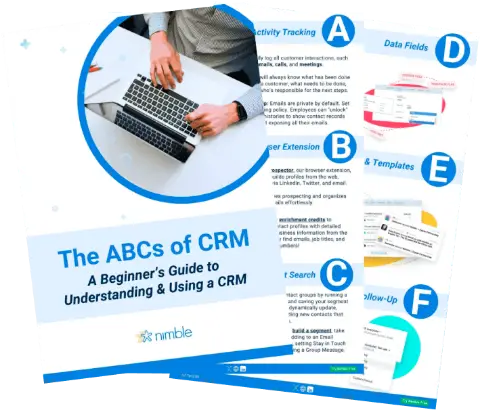
Free Guide
The ABCs of CRM
A Beginner's Guide to Understanding &
Using a CRM
Download Free
You’re All Set!
DownloadGet the most out of this guide by starting your free 14-day trial of Nimble today.
How to Do It
- Identify Repetitive Tasks: Look for processes that take up significant time, such as sending welcome emails, assigning leads to sales reps, or updating task statuses. These are prime candidates for automation.
- Start Small: Begin with basic automations, like sending an automated email when a lead fills out a form on your website. Most CRMs make this easy with drag-and-drop workflow builders.
- Use Lead Scoring: Many CRMs allow you to assign scores to leads based on their behavior, such as visiting your pricing page or opening an email. Automate notifications to alert sales reps when a lead reaches a certain score, indicating they’re ready to be contacted.
- Automate Reporting: Set up automated reports to track key metrics, like sales pipeline progress or campaign performance. This saves time and ensures stakeholders have up-to-date insights.
- Monitor and Refine: Regularly review your automations to ensure they’re delivering the desired results. If an automated email has a low open rate, for example, tweak the subject line or timing.
Pro Tip
When setting up automations, test them thoroughly to avoid errors. For instance, send test emails to yourself to ensure they’re formatted correctly and contain the right information.
5. Track and Measure Performance
A CRM isn’t just a tool for managing relationships—it’s also a powerful analytics platform. By tracking key performance indicators (KPIs), you can measure the effectiveness of your sales, marketing, and customer service efforts, and identify areas for improvement.
Why It Matters
Regularly monitoring performance helps you understand what’s working and what’s not, allowing you to optimize your strategies. For example, if your CRM shows that a particular email campaign has a high conversion rate, you can replicate its approach in future campaigns.
How to Do It
- Define Your KPIs: Choose metrics that align with your business goals. Common KPIs include lead conversion rates, customer retention rates, average deal size, and response times for customer inquiries.
- Use Dashboards: Most CRMs offer customizable dashboards that display real-time data. Set up dashboards to highlight your most important KPIs, making it easy to monitor progress at a glance.
- Analyze Trends: Look for patterns in your data, such as seasonal spikes in sales or common reasons for lost deals. Use these insights to refine your processes.
- Share Insights with Your Team: Regularly review CRM reports in team meetings to discuss successes and challenges. This fosters a data-driven culture and keeps everyone aligned.
- Set Goals: Use your CRM to set and track goals for individual team members or the entire organization. For example, you might aim to increase lead conversions by 10% in the next quarter.
Pro Tip
Don’t overwhelm yourself with too many metrics. Focus on a handful of KPIs that directly impact your business objectives, and gradually expand as you become more comfortable with the CRM.

6. Foster User Adoption Through Engagement
A CRM’s success hinges on whether your team actually uses it. Low adoption rates can lead to incomplete data, missed opportunities, and a poor return on investment. Engaging your team early and often ensures the CRM becomes an integral part of their daily workflow.
Why It Matters
If your team views the CRM as a burden or an optional tool, it won’t deliver its full potential. Engaged users are more likely to input accurate data, follow processes, and collaborate effectively, leading to better customer outcomes.
How to Do It
- Involve Users Early: Include team members in the CRM selection and setup process. Their input on features and workflows will make them feel invested in the system’s success.
- Highlight Benefits: Show your team how the CRM makes their jobs easier. For example, demonstrate how automated task reminders save time or how centralized customer data reduces the need to search through emails.
- Create a Positive Culture: Celebrate small wins, like a sales rep closing a deal using CRM insights or a marketer launching a successful campaign. Public recognition encourages others to embrace the system.
- Simplify Workflows: Avoid overly complex processes that discourage use. For instance, minimize the number of clicks needed to log a call or update a lead status.
- Solicit Feedback Regularly: Check in with users to identify pain points. If someone finds a feature confusing, provide targeted training or adjust the setup to make it more intuitive.
Pro Tip
Use CRM gamification features, like leaderboards or badges, to make adoption fun. For example, Salesforce and HubSpot offer tools to reward users for completing tasks or hitting milestones.
7. Personalize Customer Interactions
A CRM’s ability to store detailed customer information allows you to tailor interactions, making customers feel valued and understood. For beginners, focusing on personalization is a simple way to boost satisfaction and loyalty.
Why It Matters
Personalized experiences drive engagement and trust. According to studies, 80% of consumers are more likely to do business with companies that offer tailored interactions. A CRM enables this by providing a 360-degree view of each customer.
How to Do It
- Capture Relevant Data: Use your CRM to store key details, such as a customer’s purchase history, preferences, or past interactions. For example, note if a client prefers email over phone calls.
- Segment for Targeted Outreach: Group customers based on shared characteristics, like demographics or behavior. For instance, create a segment for “frequent buyers” to send them exclusive offers.
- Use Templates Wisely: Many CRMs offer email or messaging templates. Customize these with customer-specific details, like their name or recent purchase, to make communications feel personal.
- Track Interaction History: Before contacting a customer, review their CRM profile to understand past conversations. This prevents repetitive questions and shows you value their time.
- Automate Personalization: Set up automated workflows to send personalized messages, like a birthday greeting or a follow-up email after a purchase.
Pro Tip
Start with small personalization efforts, like addressing emails by name, before moving to advanced tactics like dynamic content based on customer behavior.
8. Integrate Your CRM with Other Tools
A CRM becomes exponentially more powerful when it connects with the tools your business already uses, such as email platforms, marketing software, or accounting systems. For beginners, integrations streamline workflows and reduce manual work.
Why It Matters
Integrations create a seamless flow of data across your tech stack, eliminating silos and ensuring all teams have access to the same information. This saves time and reduces errors caused by manual data entry.
How to Do It
- Identify Key Tools: List the software your business relies on, such as Gmail, Mailchimp, QuickBooks, or Slack. Check if your CRM offers native integrations for these tools.
- Start with Email Integration: Email is a common starting point for beginners. Integrating your CRM with Outlook or Gmail allows you to track email opens, log conversations, and schedule follow-ups directly from your inbox.
- Explore Marketing Integrations: If you use a marketing platform like Mailchimp or Marketo, connect it to your CRM to sync campaign data and track leads from initial outreach to conversion.
- Use API for Custom Needs: If your CRM doesn’t offer a native integration, check if it has an API for custom connections. For complex setups, consider hiring a developer or using platforms like Zapier for no-code integrations.
- Test and Monitor: After setting up integrations, test them to ensure data flows correctly. Regularly check for sync errors or outdated information.
Pro Tip
Many CRMs, like Zoho or HubSpot, offer pre-built integrations through an app marketplace. Browse these to find tools that enhance your CRM’s functionality without requiring technical expertise.
9. Regularly Review and Optimize Workflows
Your business evolves, and so should your CRM. Regularly reviewing and refining your CRM processes ensures the system remains aligned with your goals and continues to deliver value.
Why It Matters
Outdated workflows or irrelevant data fields can make your CRM less effective over time. Periodic optimization keeps the system efficient and relevant, saving time and improving outcomes.
How to Do It
- Schedule Reviews: Set a recurring calendar reminder (e.g., every six months) to evaluate your CRM setup. Involve key stakeholders from sales, marketing, and customer service.
- Assess Workflow Efficiency: Look for processes that feel cumbersome or outdated. For example, if your lead assignment rules no longer match your team structure, update them.
- Remove Unnecessary Features: If certain fields, reports, or automations are rarely used, consider removing them to simplify the system.
- Incorporate New Needs: As your business grows, you may need new features, like advanced analytics or customer support ticketing. Update your CRM to accommodate these changes.
- Stay Updated on Features: CRM providers frequently release new tools or updates. Subscribe to their newsletters or check their blog to stay informed about features that could benefit your team.
Pro Tip
Document your CRM processes in a shared guide. This makes it easier to review workflows and onboard new team members, ensuring consistency.

10. Prioritize Security and Compliance
CRMs store sensitive customer data, making security and compliance critical considerations. For beginners, understanding basic security practices and legal requirements helps protect your business and build customer trust.
Why It Matters
Data breaches or non-compliance with regulations like GDPR or CCPA can result in hefty fines and reputational damage. A secure CRM ensures customer data is protected and your business operates within legal boundaries.
How to Do It
- Choose a Secure CRM: Opt for a CRM with robust security features, such as encryption, two-factor authentication, and regular backups. Reputable providers like Salesforce and Microsoft Dynamics prioritize security.
- Set User Permissions: Limit access to sensitive data based on roles. For example, a junior sales rep may not need access to financial reports or customer payment details.
- Train on Data Privacy: Educate your team about handling customer data responsibly. Emphasize the importance of not sharing login credentials or downloading data to unsecured devices.
- Comply with Regulations: Research data protection laws relevant to your region or industry. For instance, if you operate in Europe, ensure your CRM complies with GDPR by allowing customers to opt out of data collection.
- Monitor Activity: Use your CRM’s audit logs to track who accesses or modifies data. This helps identify unauthorized activity and maintain accountability.
Pro Tip
Regularly update your CRM’s passwords and review user accounts to remove access for former employees or inactive users.
Common Pitfalls to Avoid
While these best practices will set you on the right path, there are a few common mistakes to watch out for:
- Overcomplicating the System: Resist the temptation to use every feature right away. Start with the basics and gradually incorporate advanced functionalities as your team gains confidence.
- Neglecting User Adoption: If your team isn’t fully on board, your CRM won’t deliver results. Regularly check in with users to address concerns and ensure they’re comfortable with the system.
- Ignoring Customer Feedback: Your CRM is a tool for improving customer relationships, so don’t forget to incorporate feedback from your customers. Use surveys or direct outreach to understand their needs and adjust your approach accordingly.
- Failing to Update Processes: As your business evolves, so should your CRM processes. Periodically review your workflows, automations, and data structure to ensure they still align with your goals.
Conclusion
Using a CRM doesn’t have to be intimidating, even for beginners. By choosing the right platform, training your team, maintaining clean data, leveraging automation, and tracking performance, you can unlock the full potential of your CRM and drive meaningful results for your business. These five best practices provide a solid foundation for success, helping you streamline operations, build stronger customer relationships, and achieve your goals.
Start small, stay consistent, and don’t be afraid to experiment with new features as you grow more comfortable. With time and practice, your CRM will become an invaluable asset, empowering your team to work smarter and deliver exceptional customer experiences. Whether you’re a small business owner or part of a larger organization, these strategies will help you master your CRM and set the stage for long-term growth.