

Website forms are one of the most valuable lead sources you can control. Unlike social media or ads, these are people who actively choose to contact you. However, to turn interest into revenue, you must send website form leads to CRM software cleanly and instantly to avoid losing speed, context, or the lead itself.
1. Structure Your CRM Data to Match Website Form Leads
Many forms look good but fail operationally. The mistake is designing a form only for the website visitor, not for what happens after submission.
When a lead enters a CRM, it needs enough structured data to be usable immediately. In Nimble, contacts are not just names and emails—they’re relationship records enriched with context, tags, and history.
What to Do
Instead of asking generic questions, map each form field to how Nimble stores and uses data:
- Full Name → Contact Name
- Email → Primary Email
- Phone → Phone Number
- Inquiry Type → Tags or Custom Field
- Message → Notes / Deal Description
Avoid free-text fields when structured data will be used for automation later. Dropdowns, radio buttons, and checkboxes are easier to route and segment inside Nimble.
Nimble CRM Example
Imagine a “Request a Quote” form with a dropdown field called Service Type:
- Website SEO
- Paid Ads
- CRM Setup
In Nimble, this field is mapped to a tag. When the lead submits the form, Nimble automatically applies the tag “CRM Setup” or “SEO,” allowing instant segmentation and assignment.
Result:
Sales doesn’t ask “What are you interested in?”—they already know.
2. Use Native Tools for Reliable Website Form Leads Capture
If you want the most reliable setup possible, native CRM forms are the best option. Nimble offers built-in Web Forms that can be embedded directly into your website.
Why Native Forms Matter
- No middleware or third-party connectors
- Instant lead creation
- Zero API breakage
- Automatic enrichment inside Nimble
Once embedded, every submission goes straight into Nimble as a contact or lead.
Nimble CRM Example
A consulting firm creates a “Book a Free Consultation” form inside Nimble:
- The form is embedded on the website’s landing page.
- A visitor submits their details.
- Nimble instantly:
- Creates a new contact
- Enriches the profile with social and company data
- Assigns the lead to a sales rep
- Adds the lead to the “Consultation Pipeline.”
No Zapier. No delays. No lost emails.
This setup is ideal when speed and data accuracy matter more than advanced form styling.
3. Connecting Third-Party Forms to Nimble the Right Way
Sometimes you need advanced layouts, conditional logic, or CMS-specific forms. In those cases, you can still send leads to Nimble—but you must control the data flow carefully.
Key Rules
- Send data directly to Nimble (or via one clean integration)
- Match field names exactly
- Prevent duplicate contact creation
- Test after every form update
Nimble CRM Example
A WordPress site uses a custom form plugin. The integration sends submissions to Nimble via API:
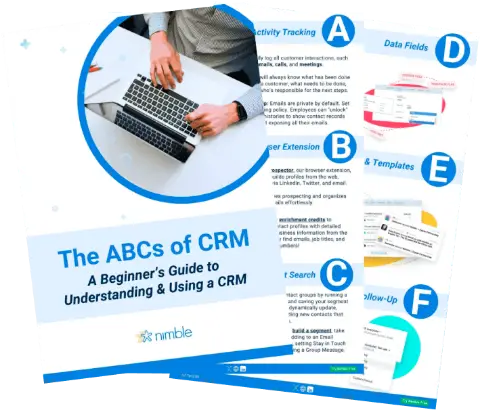
Free Guide
The ABCs of CRM
A Beginner's Guide to Understanding &
Using a CRM
Download Free
You’re All Set!
DownloadGet the most out of this guide by starting your free 14-day trial of Nimble today.
- The email address is used as the unique identifier
- If the contact exists → Nimble updates the record
- If not → Nimble creates a new contact
Additionally, the form source (e.g., “Homepage Contact Form”) is saved in a custom field. This allows Nimble reporting to show which forms generate the most qualified leads.
Result:
Clean CRM, no duplicates, full source tracking.
4. Automate Follow-Up to Close the Lead Gap
Getting leads into the CRM is only step one. What really drives conversions is what happens automatically next.
Nimble shines here because automation is built directly into its workflow logic.
What You Should Automate
- Lead assignment
- Follow-up tasks
- Email confirmations
- Sales reminders
- Pipeline movement
Nimble CRM Example: Instant Follow-Up
A user submits a “Contact Sales” form.
Nimble automation triggers:
- Assigns the lead to a sales rep based on territory
- Creates a task: “Call lead within 15 minutes.”
- Sends an automatic confirmation email: “Thanks for reaching out! One of our specialists will contact you shortly.”
If the task isn’t completed within a set time, Nimble escalates it with a reminder.
This removes human delay and ensures every lead gets attention.
5. Track, Audit, and Optimize Your Form-to-CRM Pipeline
Even well-built systems can quietly break. Forms get edited, fields are renamed, and plugins are updated. Without monitoring, leads can disappear silently.
What to Monitor
- Number of form leads per week
- Missing fields
- Lead response time
- Conversion by form source
Nimble CRM Example: Lead Source Reporting
Nimble stores lead source data directly on contact records. By filtering contacts by form source, you can quickly answer questions like:
- Which page generates the best leads?
- Which form converts to deals?
- Where should marketing spend more budget?
Quarterly testing is simple:
- Submit test leads through every form
- Confirm correct fields, tags, automations, and assignments
- Fix issues before real leads are affected
6. Enrich Website Form Leads Automatically with Social Data
Raw leads are rarely enough. A name and email tell you who contacted you, but not who they really are. Enrichment adds company size, job title, social profiles, and public business data—before the first call or email.
Why This Matters
Sales conversations improve dramatically when reps know:
- Who does the lead work for
- What industry are they in
- Their role and decision-making power
Without enrichment, reps waste time researching—or worse, contact the lead blind.
Nimble CRM Example
A B2B agency collects leads via a “Get Proposal” form.
Once the form is submitted:
- Nimble creates the contact
- Nimble automatically enriches the profile with:
- Company name
- Website
- LinkedIn profile
- Industry category
- The enriched data appears instantly in the contact record
Result:
The sales rep opens Nimble and already knows who they’re talking to and how to tailor the pitch.
7. Use Form-Specific Pipelines Instead of One Generic Funnel
One common CRM mistake is forcing all leads into a single pipeline. Website forms often represent different intents, and they should be treated differently from the start.
What to Do
Create form-based pipelines or stages:
- Contact Us → General Inquiry Pipeline
- Request a Demo → Sales Pipeline
- Partnership Form → Partner Pipeline
- Support Request → Support Workflow
This avoids mixing cold inquiries with high-intent leads.
Nimble CRM Example
A SaaS company uses three website forms:
- Demo Request
- Pricing Question
- Technical Question
Each form is mapped in Nimble to:
- A different pipeline
- Different default stages
- Different owners
Result:
Sales reps focus on demos, while support handles technical requests—without confusion or delays.
8. Trigger Email Sequences Based on Form Behavior
Not every lead is ready to talk immediately. Some need education, reassurance, or time. This is where CRM-driven email sequences shine.
Instead of blasting newsletters, tie sequences directly to form intent.
What to Automate
- Short nurturing sequences
- Delayed follow-ups
- Behavior-based branching
Nimble CRM Example
A user submits a “Download Pricing Guide” form.
Nimble automatically:
- Sends the pricing guide instantly
- Adds the lead to a 5-day email sequence:
- Day 1: Pricing explanation
- Day 3: Case study
- Day 5: Soft sales CTA
- If the lead replies → sequence stops, sales takes over
Result:
Leads are warmed up automatically, without manual follow-ups or spammy tactics.
9. Score Your Website Form Leads to Prioritize Sales Focus
Not all form leads are equal. A demo request from a company with 50 employees is more valuable than a generic inquiry from a free email address.
Lead scoring helps sales teams prioritize who to contact first.
What You Can Score
- Form type
- Company size
- Job role
- Email domain
- Engagement (email opens, replies)
Nimble CRM Example
Nimble assigns scores like this:
- +20 points → Demo request
- +10 points → Business email
- +10 points → Manager or Director title
- +5 points → Email opened
When a lead crosses a score threshold:
- Nimble flags it as “High Priority.”
- Sales gets notified instantly
Result:
Reps focus on the leads most likely to convert instead of chasing everyone equally.
10. Connect Website Forms to the Entire Relationship History
A form submission is rarely the first interaction. Leads may have:
- Opened marketing emails
- Clicked previous campaigns
- Engaged on social media
- Been contacted months earlier
Your CRM should show the full story, not just the latest form.
Nimble CRM Example
A returning visitor fills out a contact form using the same email they used months ago.
Instead of creating a new record, Nimble:
- Updates the existing contact
- Preserves all past emails, notes, and activities
- Shows the full relationship timeline
The sales rep sees:
“This lead downloaded our guide 3 months ago and replied to a campaign email.”
Result:
Follow-ups feel personal and informed—not cold or repetitive.
Final Takeaway
By this point, sending website form leads to your CRM should feel less like a technical task and more like building a revenue system.
With a properly configured CRM like Nimble, your forms can:
- Capture clean, structured data
- Enrich contacts automatically
- Route leads intelligently
- Trigger timely follow-ups
- Prioritize the best opportunities
At that stage, your website stops being a static brochure and becomes an always-on sales engine.
Website Form Leads: Frequently Asked Questions
Email notifications are easily buried or forgotten. When you route website form leads into a CRM, you create a permanent, enriched record. This allows your team to see the full relationship history and ensures that no website form leads fall through the cracks due to a lack of follow-up.
The most reliable method is using native web forms built into your CRM. Native forms ensure that website form leads are mapped correctly to your database without the risk of API breakage or data loss from third-party “bridge” apps.
Yes. By connecting your forms to automated email sequences, you can ensure that website form leads receive a personalized response the moment they click submit. This speed-to-lead is critical for converting high-intent visitors into customers.
You can use lead scoring to rank your website form leads based on data like company size or job title. This ensures your sales team focuses its energy on the most promising opportunities first.