


Last updated:
The wellness industry has been booming. More people are seeking natural, non-drug treatments for their health concerns—and chiropractic care sits right at the center of this trend. Back pain, posture issues, migraines, sports injuries, and overall spinal health have made chiropractors essential members of many communities.
But here’s the challenge: being a skilled chiropractor isn’t always enough to grow a successful practice. Many chiropractors struggle not because of their medical skills, but because of their business management and marketing processes. That’s where CRM (Customer Relationship Management) software comes in.
CRM tools help chiropractors manage patient relationships, streamline appointments, improve communication, and drive growth—all without needing a degree in business or marketing. In this article, we’ll explore:
- What a CRM is and why chiropractors need it.
- What features matter most in a chiropractic CRM.
- The top CRM and practice management tools available today.
- And most importantly—7 best practices for using CRM to grow your chiropractic business.
What Is a CRM System?
CRM stands for Customer Relationship Management. In the simplest terms, it’s software that helps you keep track of all your patient interactions in one place. Think of it as your digital assistant that remembers every detail about your patients—when they last visited, what condition they’re being treated for, how they prefer to be contacted, and even their feedback after treatment.
Most modern CRMs are cloud-based SaaS solutions. This means:
- No need for heavy servers or expensive IT setups.
- You pay a small monthly subscription (some start as low as $20).
- Updates and maintenance are handled automatically.
- You can access your system anywhere—desktop, tablet, or mobile.
For chiropractors, this is a game-changer. Instead of spending hours on paperwork and trying to manage patients manually, a CRM keeps everything organized and automated so you can focus on what you do best: healing people.
Why Chiropractors Need CRM Software
Chiropractors play a critical role in their patients’ lives. You deal with spines, necks, and joints—things people absolutely can’t live without. Patients often see you as miracle workers who help restore their mobility, reduce chronic pain, and improve quality of life.
But beyond the treatment room, you’re running a business. And like any business, you need a steady flow of patients, repeat visits, and positive referrals. CRM helps you:
- Automate appointment scheduling so fewer patients slip through the cracks.
- Track treatment history to personalize patient care.
- Send reminders so patients don’t miss sessions.
- Collect feedback to improve services.
- Run marketing campaigns to attract new patients.
For a small monthly fee, a CRM becomes your marketing manager, receptionist, and patient coordinator—all in one.
What Makes a Good Chiropractic CRM?
Not all CRMs are created equal. Chiropractors need features tailored to healthcare and patient management, not just generic sales pipelines. Here’s what to look for:
1. Appointment & Scheduling Tools
Patients expect convenience. A CRM should allow online booking, automated reminders via SMS or email, and easy calendar syncing.
2. Communication Features
Your CRM should make it simple to communicate with patients, assistants, and clinic staff. Integrations with Gmail or Office 365 are a big plus.
3. User-Friendly Interface
You didn’t study computer science—you studied chiropractic care. Your CRM should be intuitive, requiring little to no technical training.
4. Affordability
Chiropractic clinics often face tight budgets, especially when starting out. Affordable pricing is crucial.
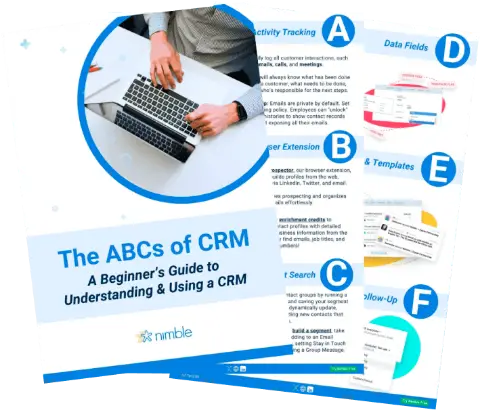
Free Guide
The ABCs of CRM
A Beginner's Guide to Understanding &
Using a CRM
Download Free
You’re All Set!
DownloadGet the most out of this guide by starting your free 14-day trial of Nimble today.
5. Customization
Every clinic is different. Look for CRMs that allow custom fields, personalized workflows, and adaptable reporting.
Best CRM & Practice Management Software for Chiropractors
There are two categories of software chiropractors often use:
- General-purpose CRMs (great for marketing and communication).
- Industry-specific practice management systems (focused on documentation, billing, and patient records).
Popular General CRMs:
- Nimble CRM – Affordable and perfect for networking and referrals.
- Zoho CRM – Flexible and scalable with lots of integrations.
- Pipedrive – Simple pipeline management, great for growing clinics.
Chiropractic Practice Management Software:
- ChiroUp – Strong educational tools for both chiropractors and patients.
- ClinicDr – Designed for billing and compliance-heavy tasks.
- ChiroTouch – All-in-one solution with documentation, scheduling, and billing.
- ChiroFusion – Cloud-based and user-friendly with affordable pricing.
While chiropractic-specific tools often cost $150–$400 per month, general CRMs like Nimble start at $19/month, making them an excellent option for small or growing practices.
7 Best CRM Practices to Grow Your Chiropractic Business
Now let’s get into the heart of this guide: how to actually use CRM to grow your practice. These best practices combine patient care with business growth strategies.
1. Use Segmentation to Understand Patients
One of the most powerful features of a CRM is segmentation—the ability to group patients based on their needs, conditions, or demographics.
For example, you can create segments such as:
- Patients with back pain.
- Patients recovering from sports injuries.
- Patients suffering from migraines.
- Car accident injury patients.
Why does this matter? Because segmentation allows you to:
- Send personalized emails (“Tips to prevent migraine headaches” or “5 stretches for athletes”).
- Analyze which conditions bring in the most patients.
- Build targeted marketing campaigns to attract similar patients.
You can even create fun segments like “Netflix Thrillers Fans” if you discover patients with shared interests during casual conversations. This personal touch builds long-term loyalty.
2. Build a Patient Education Library
Chiropractors aren’t just healers—they’re educators. Patients need to understand how lifestyle, posture, and habits affect their spine and health.
A CRM can store and distribute templated educational reports. Imagine being able to send a new patient a customized PDF about their condition after their first visit, or emailing weekly posture tips to office workers.
Benefits of this practice:
- Establishes your clinic as an authority.
- Improves patient trust and compliance.
- Saves time for your team (no need to rewrite explanations each time).
Plus, when new chiropractors join your clinic, they’ll have access to this knowledge library for faster onboarding.
3. Take Advantage of Tagging Features
Most CRMs allow you to tag patients, tasks, and deals. Tagging is like creating quick shortcuts that make searching and reporting much easier.
Examples of tags:
- “Has kids” – Perfect for sending family-related offers or wellness tips.
- “MD referral” – Track which patients came through physician recommendations.
- “Marketing” – Keep tabs on promotional campaigns.
Even small touches—like sending an e-card for Mother’s Day to patients with families—show that you care beyond the clinic walls.
4. Strengthen MD Referrals with CRM Pipelines
Referrals from medical doctors can be one of the strongest sources of new patients. But most chiropractors don’t fully capitalize on this opportunity.
Here’s how CRM helps:
- Create a separate pipeline just for MD relationships.
- Tag MD contacts with their interests, practice details, and personal notes.
- Send referral reports to MDs after treating patients they referred.
When MDs see that you’re professional, organized, and respectful of their patients’ care, they’ll send even more patients your way.
5. Create Detailed Case Notes
Documentation is essential—not just for legal and billing purposes, but also for patient progress tracking.
With CRM, you can:
- Build case note templates to save time.
- Store progress reports that can be quickly shared with patients or other healthcare providers.
- Convert anonymized case studies into social media content to educate the public.
Example: if you treat a migraine patient with great results, document the process, tag it in your CRM, and set a reminder to turn it into an Instagram video later.
6. Collect Patient Feedback Through Surveys
The best way to know if your clinic is thriving is to ask your patients. CRMs make this easy by integrating with survey tools like SurveyMonkey or Google Forms.
Post-treatment surveys can tell you:
- How satisfied patients are with their care.
- Whether your staff is meeting expectations.
- What could be improved.
Positive reviews can be shared (with permission) as social proof, while constructive criticism helps you refine your services.
7. Boost Reviews on Google & Healthgrades
Your online reputation is your clinic’s business card. Many people choose their chiropractor based on Google reviews or Healthgrades profiles.
Use your CRM to:
- Automate follow-up emails with direct links to review pages.
- Send requests to happy patients immediately after treatment.
- Track which patients have already left reviews.
Even one or two sentences from a satisfied patient can make a huge difference in attracting new clients.
Grow Your Chiropractic Business with CRM
Running a chiropractic practice means balancing patient care with business growth. CRM software helps you do both.
By segmenting patients, building educational resources, tagging effectively, strengthening referrals, documenting cases, gathering feedback, and boosting online reviews, you’ll create a thriving clinic that attracts new patients while keeping existing ones loyal.
If you’re ready to start, try an affordable and customizable CRM like Nimble. It’s user-friendly, integrates with 165+ apps, and costs less than most practice management systems. Best of all, you can try it free for two weeks with no credit card required.
Your patients deserve the best care—and your business deserves the best tools to grow.