

Last updated:
I’ll start blunt. Most data analysts don’t even think about CRMs. They think of Python, SQL queries, Tableau dashboards, Power BI slicers. Not client databases. But the world changed—remote teams, messy inboxes, a hundred Slack channels chirping at once. If you’re freelancing or managing multiple stakeholders, you need something that keeps your day from dissolving into tiny pieces.
So yeah, let’s talk CRMs. Not as “sales tools” (that’s the usual pitch) but as actual productivity lifelines for people who live inside numbers.
I’ve been poking around different platforms, using them in real projects, and what surprised me—three systems stand out. Nimble CRM, HubSpot CRM, and Zoho CRM. Different flavors, different strengths, but all strangely useful for us data folk.
Before diving deep, let me remind you: this isn’t a polished vendor whitepaper. I’m sharing as someone who’s juggled freelance analytics gigs, worked with offshore teams, and tried to survive inbox chaos. Some things impressed me. Some things annoyed the hell out of me. I’ll say both.
1. Nimble CRM
I’ll be honest—Nimble feels like it was designed by someone who got sick of juggling too many tabs. You know the vibe: LinkedIn in one window, Gmail in another, Twitter DMs lurking, a Google Sheet somewhere with half-remembered contact notes. Nimble stitches that junk together.
Features (the highlights)
- Contact management that auto-enriches profiles (pulls social links, company info, background data).
- Pipeline and deal tracking.
- Task and calendar baked right in.
- Group email campaigns with open-tracking.
- Social media integration (you can pull leads straight from Twitter or LinkedIn).
- Reporting dashboards, nothing over-complicated but clean enough.
- Nimble Prospector browser extension for grabbing contacts from the wild.
Price
- $25 per user monthly (if you pay month-to-month).
- $19 per user monthly (if you pay yearly).
- Free trial (14 days, no card).
Description—what it feels like in practice
I remember the first week using Nimble. Imported my contacts via Gmail. Suddenly, people I barely remembered showed up with job titles, company logos, links to their socials. Creepy? A little. Useful? A lot.
It’s light. No enterprise bloat. You don’t drown in menus. And the mobile app doesn’t lag like a dying elephant, which I can’t say for some “bigger” CRMs.
Application for Marketing Automation
Emailing. That’s where it shines for analysts who sometimes cross into marketing. Nimble lets you filter, tag, segment, then blast a group email. Then watch who opened it. For a freelance analyst trying to pitch a new dashboard service to ten old clients—that’s gold.
Add Zapier on top and it connects everywhere. You can literally push data from a Google Sheet into Nimble, tag contacts by project, then trigger follow-up reminders. No need to hand-build an automation engine.
And hey, Nimble isn’t pretending to be Salesforce. That’s its strength. It’s a focused, affordable sidekick.
2. HubSpot CRM
Now, HubSpot. Different beast. Bigger, heavier, shinier. This is the one companies brag about because it has a free tier. I used to dismiss it as “too marketing-team-oriented,” but after playing with it—no, it works fine for analysts too.
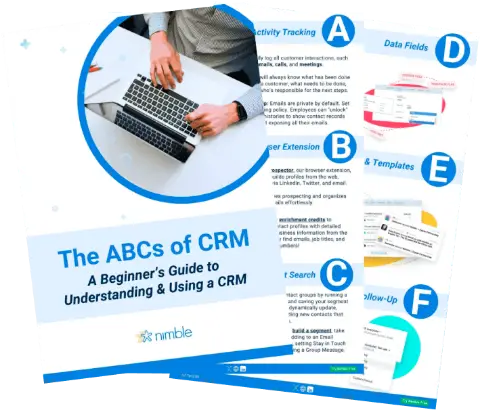
Free Guide
The ABCs of CRM
A Beginner's Guide to Understanding &
Using a CRM
Download Free
You’re All Set!
DownloadGet the most out of this guide by starting your free 14-day trial of Nimble today.
Features
- Totally free starter CRM (contacts, deals, tasks).
- Email tracking and scheduling.
- Meeting links (think Calendly, but inside CRM).
- Integration with Gmail, Outlook, Slack.
- Dashboards with drag-and-drop reports.
- Upgrade path into automation, ads management, landing pages if you pay.
- Mobile app decent, a little cluttered though.
Price
- Free for basic CRM (yep, no tricks).
- Paid “Starter CRM Suite” starts at $20/month per seat.
- Pro packages go into hundreds per month once you add automation or marketing hubs.
Description—what it feels like in practice
HubSpot is like walking into a giant supermarket. You just want milk (contact management). Suddenly you’re surrounded by aisles of everything—ads, CMS, SEO audits, social scheduling. Easy to get lost. But… the free CRM is actually stripped clean. You can just use deals, contacts, tasks, and be fine.
When I synced my Gmail, it felt slick: open an email in Gmail, HubSpot sidebar tells me if the person is already a contact, lets me log notes, create deals. Saves time.
Application for Marketing Automation
If Nimble is about simplicity, HubSpot is about scale. Their marketing automation is robust: drip campaigns, lead scoring, workflows. Even free, you get email scheduling and templates. Paid, you can set up automated nurture campaigns that would make Mailchimp jealous.
For a data analyst freelancing? The sweet spot is using HubSpot to track inbound leads. Imagine you’ve got a personal site with a “hire me” form. Hook that to HubSpot. Every lead goes straight into CRM, tagged, logged, ready for follow-up. No more losing random form submissions in Gmail hell.
3. Zoho CRM
Zoho’s been around forever, and honestly, it feels like an underdog that keeps getting overlooked. I gave it a spin during a project with an Indian client—they were running everything on Zoho (email, finance, CRM, even HR). It clicked why: cheap, modular, customizable.
Features
- Contact and lead management.
- Sales pipeline with custom stages.
- Email integration.
- Workflow automation (if this, then that).
- AI assistant (“Zia”) for insights.
- Mobile app surprisingly good.
- Integrates with Zoho’s massive suite (Docs, Projects, Books).
Price
- Free tier for 3 users.
- Paid plans start at $14/user/month.
- Enterprise tier around $40/user/month (still cheap compared to Salesforce).
Description—what it feels like in practice
Zoho feels utilitarian. Less pretty, more function. Menus aren’t as intuitive as Nimble, but you can customize everything. Custom fields, automation rules, dashboards. It’s like clay—you shape it to your needs, but it takes effort.
If you’re the type of analyst who loves fiddling with settings, creating tags, designing your own views—you’ll like it. If you hate setup, you’ll curse it.
Application for Marketing Automation
Zoho’s automation is sneaky powerful. You can trigger emails, assign tasks, update fields based on conditions. For example: a new lead tagged “SQL training inquiry” automatically triggers an intro email, sets a follow-up reminder, and updates a Google Sheet.
Analysts doing part-time consulting gigs could automate onboarding: someone fills a form, Zoho sends them a questionnaire, logs the response, schedules a call. Done.
Comparison (messy but real list)
- Ease of use: Nimble wins. It’s clean, almost playful. HubSpot is medium (friendly UI but too many features). Zoho is hardest (flexible but cluttered).
- Price: HubSpot free tier is unbeatable. Nimble mid-range at $19–25. Zoho cheapest for teams (starts $14, free for 3 users).
- Marketing automation: HubSpot strongest. Nimble light but handy. Zoho flexible, rule-based.
- Contact management: Nimble shines with auto-enrichment. HubSpot solid. Zoho customizable.
- Integrations: HubSpot plugs into everything mainstream. Nimble relies on Zapier but works fine. Zoho integrates best with its own suite.
- Learning curve: Nimble easiest. HubSpot moderate. Zoho steep.
- Best for freelancers: Nimble.
- Best for small agencies: HubSpot.
- Best for data-driven tinkerers: Zoho.
Conclusion
Data analysts don’t usually think “CRM.” But maybe they should. The job market is exploding—statisticians, ops research analysts, data scientists all climbing. More gigs, more contacts, more projects. And more chaos unless you organize.
Nimble keeps things light, connected, personal. HubSpot scales like crazy if you lean into marketing. Zoho gives you a toolchest to customize workflows.
If I had to pick for myself as a solo analyst? Nimble. Cheap, easy, I can focus on the work not the setup. If I were running a small analytics shop with five people? HubSpot, free tier to start, grow into automation later. And if I were a tinkerer or working with clients already living in the Zoho ecosystem? Then yeah, Zoho makes sense.
Bottom line: spreadsheets and BI dashboards are where we shine, but CRMs are where we stop drowning in admin. If you’re freelancing, or even just managing multiple stakeholders—get one. Doesn’t matter which, just don’t keep juggling inboxes forever.