

Last updated:
Sales is the heartbeat of any business. You can have the best product, the strongest team, or the most innovative ideas—but without effective sales performance, your business will struggle to survive, let alone thrive. Sales performance is more than just hitting numbers. It reflects how well your company attracts, converts, and retains customers while adapting to market shifts.
In this article, we’ll explore 10 reasons why sales performance is so critical to your business success. From boosting revenue to building resilience in changing times, these insights will show you why tracking and improving sales performance should be at the top of your priority list.
1. Sales Performance Directly Impacts Revenue
At its simplest, sales performance is the single biggest driver of your company’s bottom line. Every deal closed translates into revenue, and consistently meeting or exceeding sales goals ensures your financial health.
When sales teams are performing well:
- Revenue streams become more predictable.
- Businesses can budget and invest more confidently.
- Growth plans have a stronger foundation.
Example: A company that improves its win rate by just 5% can see significant jumps in revenue without increasing marketing spend. That’s the power of strong sales performance.
2. It Fuels Business Growth and Expansion
High-performing sales teams don’t just maintain revenue—they unlock new markets and opportunities. By identifying gaps, spotting untapped customer segments, and capitalizing on trends, they drive expansion.
Sales performance is often the deciding factor between a company that stays stagnant and one that scales successfully.
Scenario: Imagine a SaaS company that consistently exceeds its sales targets. With steady growth, it has the confidence and capital to expand internationally—something that would be impossible without strong sales performance backing it up.
3. It Strengthens Customer Acquisition
Bringing in new customers is essential for growth. A sales team that performs well converts more leads into paying clients, making every marketing dollar more effective.
Why it matters:
- Strong acquisition means more market share.
- Better performance reduces the cost per acquisition.
- Consistent customer growth enhances brand reputation.
Tip: Tracking forward-looking metrics like pipeline health can help predict acquisition success and ensure no opportunities are missed.
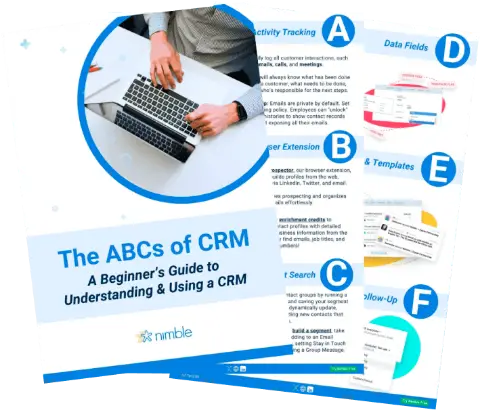
Free Guide
The ABCs of CRM
A Beginner's Guide to Understanding &
Using a CRM
Download Free
You’re All Set!
DownloadGet the most out of this guide by starting your free 14-day trial of Nimble today.
4. It Improves Customer Retention and Lifetime Value
Winning customers is only half the battle. Retaining them is where true profitability lies. Sales performance isn’t just about landing new deals—it’s about nurturing relationships and ensuring clients stay loyal.
- High retention boosts Customer Lifetime Value (CLV).
- Repeat business creates stable revenue.
- Loyal customers often become brand advocates, driving referrals.
Example: A company with strong account management sees retention rates of 90%. Even if new customer acquisition slows temporarily, loyal clients keep revenue steady.
5. It Builds a Competitive Advantage
In today’s crowded markets, every business is competing for the same customers. A strong sales team is often the edge that sets you apart.
- Better sales performance means faster response to leads.
- Teams that know how to sell effectively can outmaneuver competitors, even with similar products.
- Agile sales processes allow you to capitalize on opportunities before others do.
Scenario: Two companies launch similar software products. The one with a stronger sales team wins contracts faster, establishes market presence, and secures customer loyalty early—leaving the competitor behind.
6. It Boosts Team Morale and Productivity
Sales performance isn’t just numbers on a spreadsheet—it reflects the health of your sales culture. Teams that perform well are more motivated, engaged, and collaborative.
- Meeting targets builds confidence.
- Recognition for performance boosts morale.
- High-performing teams attract top talent.
On the flip side, weak sales performance often leads to frustration, burnout, and turnover. Strong performance creates a positive feedback loop that drives both people and profits.
7. It Enables Better Forecasting and Planning
Good sales performance provides clarity. When your sales metrics are consistent, you can make accurate forecasts for revenue, hiring, marketing budgets, and product development.
- Stable performance reduces uncertainty.
- Leaders can plan for expansion with confidence.
- Financial decisions become less risky.
Example: A retail company with steady month-over-month sales growth can predict seasonal demand more accurately and stock inventory efficiently, reducing waste and increasing profits.
8. It Improves Adaptability in Changing Markets
Markets evolve quickly. Consumer preferences shift, technology changes, and competitors adapt. Sales performance shows how well your team keeps up with these shifts.
- Agile sales teams adjust strategies faster.
- Strong performance often indicates a culture of innovation.
- Adaptability helps businesses survive downturns.
Scenario: During the pandemic, businesses with high-performing sales teams quickly pivoted to digital selling. Others, less adaptable, struggled to stay afloat.
9. It Enhances Customer Experience
Sales isn’t just about transactions—it’s about relationships. Strong sales performance often reflects how well your team understands and serves customer needs.
- Personalized interactions improve satisfaction.
- Faster response times create trust.
- A consultative sales approach builds long-term partnerships.
Why it matters: Today’s customers expect more than just a product—they want a seamless buying journey. Sales performance is one of the clearest indicators of how well you deliver that experience.
10. It Leverages Technology for Strategic Advantage
Modern sales performance is inseparable from technology. Tools like CRM systems, data analytics, and AI-driven insights make teams more effective.
- Automation saves time on repetitive tasks.
- Analytics highlight trends and risks early.
- CRMs centralize customer data for better decision-making.
Emerging trends:
- AI & Machine Learning: Predict customer behavior and recommend next steps.
- Virtual & Augmented Reality: Create immersive product demos.
- Remote Selling Tools: Expand reach without geographical limits.
Example: A company using Nimble CRM gains real-time insights into pipeline health, helping managers coach reps more effectively and boosting overall sales performance.
Conclusion: Sales Performance as the Lifeline of Business
Sales performance is not just another business metric—it’s the foundation of long-term success. It drives revenue, fuels growth, strengthens customer relationships, and ensures adaptability in a fast-changing world.
By focusing on the 10 reasons outlined above—from revenue impact and retention to technology adoption and forecasting—you can see why improving sales performance should be a top priority for every business leader.
Invest in your sales team, track the right metrics, and leverage technology like CRM tools to keep performance strong. When your sales performance thrives, your entire business thrives.