

Last updated:
“Omnichannel” is no longer just a buzzword—it’s a proven strategy that separates customer-first companies from the rest. Businesses today don’t simply compete on price or product; they compete on customer experience. And that’s exactly where the combination of CRM (Customer Relationship Management) and omnichannel marketing shines.
When used together, these two tools create a seamless journey across every touchpoint—whether that’s social media, email, live chat, or in-store. The result? More engaged customers, higher retention rates, and stronger lifetime value.
In this guide, you’ll learn 15 actionable tips to master CRM in omnichannel marketing. Each tip builds on the last, helping you move from basic understanding to advanced execution.
Tip 1: Understand the Difference Between Multichannel and Omnichannel
Many brands confuse “multichannel” with “omnichannel,” but the difference is critical.
- Multichannel: Using more than one platform (e.g., social media + email + print ads). Each channel often operates in isolation.
- Omnichannel: Unifying every channel into a seamless experience. Customer data flows across platforms so messaging, support, and offers stay consistent.
Your CRM is the backbone of omnichannel because it ensures all channels “talk” to each other instead of running as silos.
Tip 2: Map the Customer Journey Before You Automate
Before investing in automation, you need to understand your customer journey. Map out how customers discover your brand, interact with touchpoints, and move toward purchase.
Your CRM should track every stage—awareness, consideration, purchase, and retention. When you plug this journey into your omnichannel strategy, you can tailor campaigns to specific stages instead of sending generic messages.
Tip 3: Use Your CRM for Deeper Customer Segmentation
Omnichannel isn’t about “spraying” messages everywhere—it’s about precision targeting.
With CRM data, you can segment audiences based on:
- Email engagement
- Purchase history
- Web browsing behavior
- Age, gender, and location
When combined with omnichannel tools, segmentation ensures customers receive messaging that matches their behavior, not just their demographic.
Tip 4: Break Down Data Silos Across Departments
Too often, sales, marketing, and support each keep their own databases. That’s a recipe for broken experiences.
For example, imagine a customer complains on social media, then gets an irrelevant promotional email hours later. With silos, this happens all the time.
Your CRM should centralize data so all teams see the same history—purchases, complaints, interactions—regardless of channel. That’s the foundation of true omnichannel marketing.
Tip 5: Gather Data From Every Channel
CRMs thrive on data, and omnichannel expands the scope of what you can collect.
Don’t just rely on website forms or email clicks. Pull in data from:
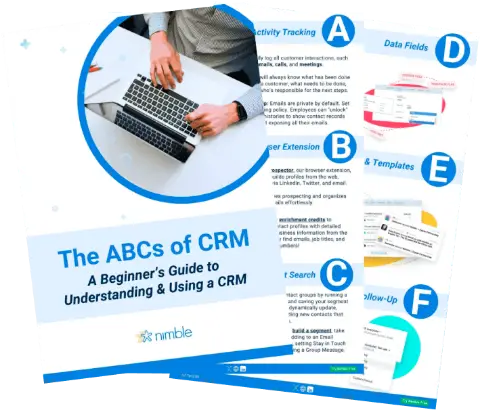
Free Guide
The ABCs of CRM
A Beginner's Guide to Understanding &
Using a CRM
Download Free
You’re All Set!
DownloadGet the most out of this guide by starting your free 14-day trial of Nimble today.
- Chatbots
- Social media mentions
- In-store transactions
- Call center logs
Every interaction adds another piece to the customer puzzle. The richer your CRM profile, the more personalized your omnichannel campaigns can be.
Tip 6: Prioritize Speed with Turnaround Times
Customers expect instant answers. A CRM already helps reduce support response times, but omnichannel can cut them even further.
For example, if a customer emails and then follows up via live chat, your CRM should unify those tickets so an agent picks up exactly where the customer left off. That reduces frustration and keeps support costs down.
Tip 7: Invest in Cross-Channel Support
Customers don’t stick to one channel, so neither should you.
Instead of only offering phone or email, give customers multiple choices—chat, social, SMS, and more. The key is consistency. With omnichannel CRM, the conversation continues seamlessly no matter where it started.
A customer shouldn’t have to re-explain their issue just because they switched from Instagram DMs to a phone call.
Tip 8: Personalize Messaging at Scale
Omnichannel marketing makes personalization scalable. With CRM data, you can send emails tailored to purchase history, retarget ads based on browsing behavior, and offer support in the customer’s preferred language.
The difference between “Hi there” and “Hi Sarah, how’s your recent order of running shoes working out?” is enormous. The first is generic. The second feels personal, timely, and valuable.
Tip 9: Track the Full Customer Journey
Your CRM should show you how customers engage from the first click to long after purchase. But omnichannel deepens that view.
Instead of only knowing a customer bought twice last year, you’ll see:
- Which channels influenced those purchases
- How long they browsed before buying
- What content moved them closer to conversion
This kind of insight helps you not only sell more but also predict future behavior.
Tip 10: Use Omnichannel for Smarter Reporting
Data is useless without interpretation. Omnichannel reporting tools allow you to compare performance across all channels instead of looking at them in isolation.
For example:
- Which channel drives the most first-time purchases?
- Which channel nurtures repeat buyers best?
- Where are customers dropping out of the journey?
Pair this with CRM dashboards, and you’ll spot patterns you’d otherwise miss.
Tip 11: Focus on Experience, Not Just Sales
Omnichannel CRM isn’t just about pushing offers—it’s about building relationships.
Instead of bombarding customers with discounts, use your CRM to schedule helpful content. That could mean:
- Tutorials on how to use a product
- Invitations to exclusive webinars
- Loyalty rewards based on engagement
This kind of value-first approach boosts lifetime value far more than one-off sales campaigns.
Tip 12: Automate Without Losing the Human Touch
Automation is powerful, but it can easily feel robotic.
Balance automation with empathy:
- Use chatbots for simple FAQs, but ensure a human agent can step in seamlessly.
- Automate abandoned cart reminders, but personalize them with product recommendations.
- Send automated thank-you emails, but add the agent’s name who handled the customer’s inquiry.
Your CRM can ensure automation feels human, not mechanical.
Tip 13: Gradually Transition Into Omnichannel
Going omnichannel overnight can overwhelm your team. The best approach is gradual:
- Start with your top two channels.
- Integrate them into the CRM.
- Add new channels as your team gains confidence.
This phased approach minimizes errors and helps staff adapt to new workflows without burning out.
Tip 14: Align Sales, Marketing, and Support
Omnichannel CRM works best when every department collaborates.
- Marketing feeds personalized campaigns into the CRM.
- Sales uses CRM data to nurture warm leads.
- Support leverages customer history to resolve issues faster.
When these three arms of your business are aligned, the customer feels it. The experience is smoother, more relevant, and more trustworthy.
Tip 15: Measure and Refine Continuously
Omnichannel CRM is not a one-time project—it’s a cycle.
Regularly measure KPIs like:
- Average response times
- Customer satisfaction scores
- Retention and churn rates
- Revenue per customer
Use these insights to refine your omnichannel strategy. Small tweaks—like adjusting message timing or optimizing cross-channel handoffs—compound into major improvements over time.
Conclusion: CRM and Omnichannel Are Stronger Together
A standalone CRM is powerful. Omnichannel marketing is powerful. But when combined, they become unstoppable.
Customers no longer think in “channels.” They think in experiences. Whether they’re tweeting, calling, or shopping in-store, they expect your brand to remember them, anticipate their needs, and respond instantly.
That’s the promise of CRM in omnichannel marketing. And by applying these 15 tips, you’ll be well on your way to delivering the kind of seamless, customer-first experiences that turn one-time buyers into lifelong fans.